
In today’s connected living rooms, the television has evolved far beyond a passive display for broadcast content. It has become a smart hub — a centerpiece that streams content, controls IoT devices, and even responds to your voice. At the core of this transformation are the smart TV platforms that power these capabilities. Among the most prominent are Samsung Tizen OS and LG webOS, two operating systems that define the user experience for millions of global households.
In this article, we’ll take a deep dive into these two smart platform TV ecosystems, exploring their architecture, usability, app ecosystems, and long-term viability.
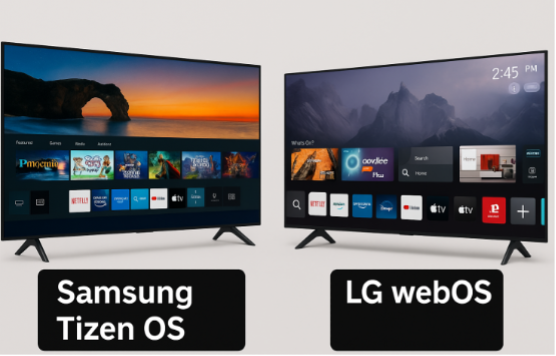
1. Platform Overview
Initially developed as a general-purpose OS for mobile and IoT devices, Tizen OS was adopted by Samsung for its smart TVs starting in 2015. Built on a Linux-based open-source foundation, Tizen is designed for flexibility, performance, and tight integration with Samsung’s broader ecosystem, including Galaxy smartphones and SmartThings devices.
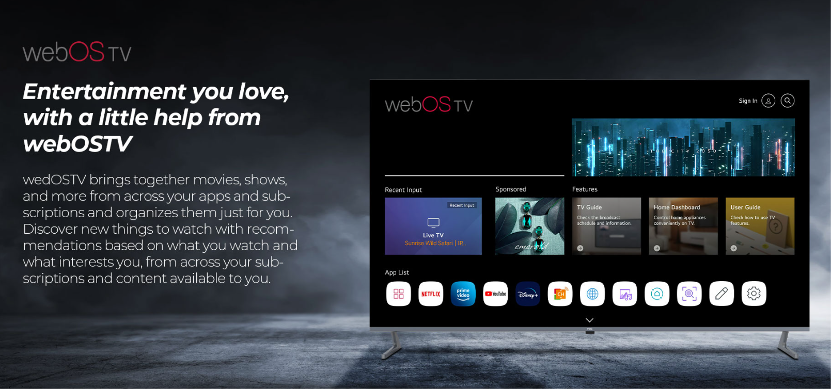
LG webOS originated from Palm’s mobile operating system, eventually acquired by LG and re-engineered for television. First appearing in LG smart TVs in 2014, webOS focuses on simplicity, ease of navigation, and a sleek, card-based UI. Over the years, it has evolved to support advanced AI features and smart home integration.
2. User Interface & Navigation
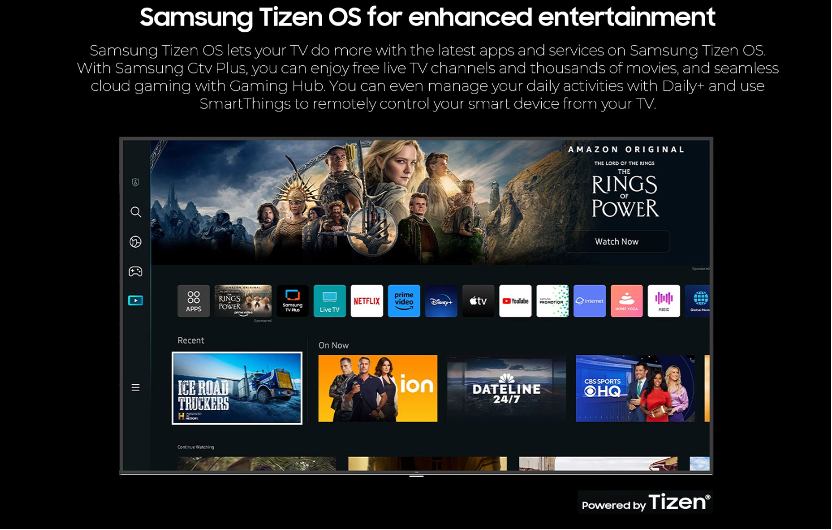
User interface design can make or break a smart TV experience. Samsung’s Tizen OS presents a minimalist launcher bar overlay at the bottom of the screen, allowing users to access apps, inputs, and settings without interrupting content playback. It supports gesture-based navigation and integrates seamlessly with the Smart Hub ecosystem.
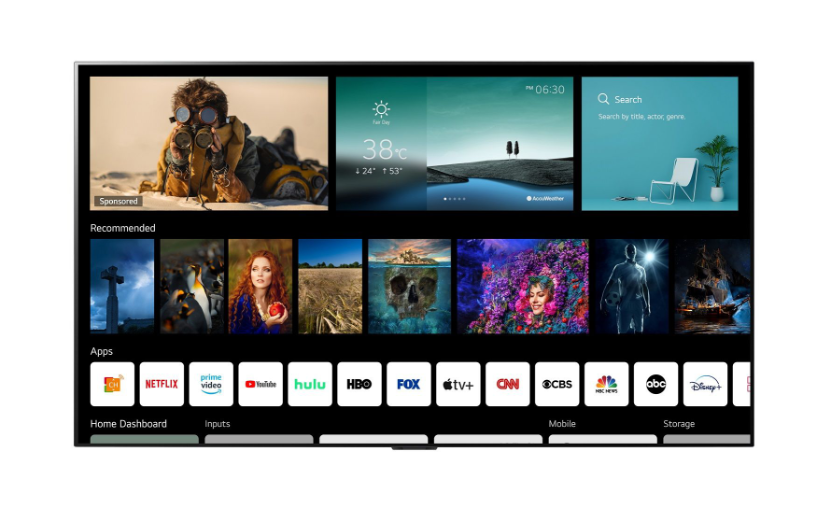
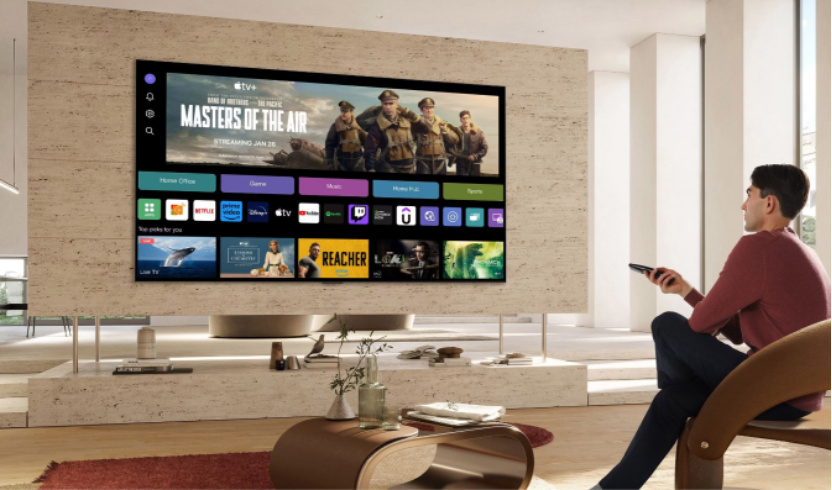
LG webOS, on the other hand, uses a horizontal card-based UI called the “Launcher Bar.” Each open app or source is represented as a card, offering quick access to recent activity. Its Magic Remote, equipped with a motion sensor and voice input, enhances navigation, especially for those accustomed to mouse-like interactions.
Both platforms support voice assistants — Bixby, Google Assistant, and Alexa on Tizen; Google Assistant and Alexa on webOS — with deep system-level integration.
3. Application Ecosystem
The breadth and depth of supported apps are essential for any smart platform TV to thrive. Both Samsung Tizen OS and LG webOS support all major streaming services including Netflix, Prime Video, Disney+, Apple TV, YouTube, and more. Samsung’s platform generally offers broader support for regional and niche applications due to its more aggressive third-party developer outreach.
However, LG’s webOS has made significant strides with web-based apps and support for HTML5, making app development easier and more responsive. Both platforms now support cloud gaming apps like NVIDIA GeForce NOW and Xbox Cloud Gaming, albeit with varying performance.
Side note for developers: Samsung offers the Tizen Studio for app development, while LG provides webOS TV SDK. Tizen supports more low-level customization, while webOS leans toward simplicity with web technologies.
4. Software Updates & Longevity
Samsung is known for providing regular firmware and security updates for its smart TVs, typically extending support for up to 5 years. Tizen OS often gets feature enhancements post-launch, especially for mid-to-high-end models.
LG is slightly more conservative with updates, often limiting new features to newer models. However, webOS has started offering modular updates through the LG Content Store, allowing users to install UI enhancements and new features without waiting for full OS revisions.
5. Smart Home & Ecosystem Integration
In the era of smart homes, a smart platform TV must function as a control hub. Samsung Tizen OS integrates tightly with SmartThings, allowing users to monitor and control compatible devices directly from their TV interface — lights, thermostats, security cameras, and more.
LG webOS pairs with ThinQ AI, which supports LG’s broader appliance ecosystem and can also work with select third-party devices. While SmartThings has wider device support, ThinQ offers a more intuitive interface and proactive AI suggestions.
6. Security and Privacy
Both Tizen OS and webOS are certified by industry standards like ISO/IEC 27001 for information security. Samsung employs Knox, its proprietary security platform, to ensure device integrity and user data protection. LG also offers robust permission controls and anonymized data policies, but has faced criticism in the past over telemetry defaults.
It’s worth noting that both platforms allow users to opt out of data collection and provide transparency reports via their settings menus.
7. Market Adoption and User Sentiment
According to market reports, Samsung continues to lead global smart TV shipments, largely due to the maturity and reach of Tizen OS. LG, while second in global market share, enjoys particularly strong presence in North America and Europe, where webOS is praised for its user-friendly design.
User reviews on forums and marketplaces suggest:
Tizen is often lauded for its speed, responsiveness, and SmartThings integration.
webOS is frequently favored for ease of use, Magic Remote, and clean UI.
Spotlight: NPC Smart TVs Powered by Tizen OS and webOS
As more manufacturers adopt robust smart TV platforms, we’re beginning to see high-performance hardware meet intuitive software in compelling ways. One such example is Guangzhou Xianyou Intelligent Technology Co., Ltd, a rising player in the smart home electronics space operating under the NPC brand. NPC has launched two flagship models that exemplify the strengths of both Samsung Tizen OS and LG webOS, offering premium visuals, full-featured smart functionality, and broad appeal for diverse user needs.
1. NPC-85N21 (Powered by Samsung Tizen OS)
For users deeply invested in the Samsung ecosystem or those who prioritize a mature, secure platform, the NPC-85N21 is a powerhouse solution. This 85-inch UHD Smart TV leverages the full capabilities of Samsung Tizen OS, bringing a vast library of apps and seamless connectivity to the big screen.
Key features include:
The Tizen Experience: With Tizen at its core, this model offers instant access to top-tier streaming services like Netflix, Prime Video, and YouTube right out of the box. It benefits from Samsung’s renowned Knox security and responsive interface.
Visual Performance: The unit supports HDR10+, a dynamic range technology that adjusts brightness and contrast scene-by-scene, ensuring that the 85-inch display delivers cinematic depth and detail.
Smart Hub: Acting as a central command center, the Tizen OS allows this TV to communicate effortlessly with other smart devices, making it an ideal choice for the modern connected home.
2. NPC-85N18G (Powered by LG webOS)
For those who prefer the intuitive card-based navigation of LG and cutting-edge IoT connectivity, the NPC-85N18G combines premium QLED hardware with the versatility of LG webOS. This model is designed for high-fidelity viewing and broad device compatibility.
Notable specifications:
Display Tech: This 85-inch model features a QLED D-LED (Direct LED) panel with a 4K UHD resolution (3840 x 2160). It boasts a color gamut of 85% NTSC and 1.07 billion colors, ensuring vibrant, lifelike images.
Connectivity & IoT: Running on webOS, the 85N18G is future-proofed with support for Matter IoT, the new universal smart home standard. It also features Apple AirPlay and HomeKit integration, making it the perfect choice for Apple users.
Processor: Powered by the RTD2874 chassis with a Quad-core CPU (A752 + A552) and IMG BXE4 GPU.
Audio: Equipped with 2x10W speakers supporting Dolby Digital Plus for immersive sound.
Versatility: Includes dual-band WiFi (2.4G/5G), Bluetooth, and Optical output, plus specific modes for Cinema, Sport, and Gaming.
Final Thoughts
As this comparison illustrates, the right smart TV platform depends on your priorities — whether it’s app variety, smart home integration, or simplicity in daily use. Samsung’s Tizen OS offers a rich, performance-oriented ecosystem, while LG webOS excels in UI clarity and user friendliness.
Manufacturers like Guangzhou Xianyou Intelligent Technology Co., Ltd are bridging this gap by offering TVs like the NPC-85N21 and NPC-85N18G, which deliver cutting-edge display technologies combined with top-tier smart platforms. These devices not only bring the best of Tizen OS and webOS into the home but also serve as prime examples of how hardware-software synergy can define the future of the smart TV landscape.
Whether you’re a home cinema enthusiast or a tech-savvy homeowner, these models ensure you don’t have to compromise between performance, platform power, and smart living compatibility.