

A computer monitor combines several technologies to turn digital signals into visible images. For business buyers, understanding how these components work makes it easier to evaluate products beyond screen size and appearance. Panel technology, resolution, refresh rate, viewing angle, backlighting, and color performance all influence the final experience. For monitor manufacturers, balancing these specifications is equally important when developing products for offices, entertainment, cloud gaming, and other applications.
How a Monitor Panel Creates an Image
The panel is the central image-producing component of an LCD monitor. TFT-LCD technology uses an array of individually controlled pixels to regulate light and produce different colors. Each pixel contains subpixels that contribute red, green, and blue components, allowing the display to reproduce a broad range of images.
Panel technology also affects viewing characteristics. ADS, for example, is a type of LCD technology developed by BOE and is designed to provide wide viewing angles. BOE describes its ADS technology as offering viewing angles close to 180 degrees while maintaining image quality from different positions.
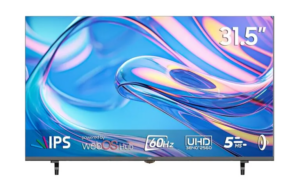
Our NPC-MU3221-Y uses a 31.5-inch TFT-LCD panel with ADS technology, supplied by BOE. It provides a 178° horizontal and 178° vertical visual angle, making the screen suitable for shared viewing environments where users may not always sit directly in front of the display.
Resolution Determines Image Detail
Resolution refers to the number of pixels displayed horizontally and vertically. A higher pixel count generally allows a monitor to present more image detail, provided the content and hardware can take advantage of it.
Our MU3221-Y provides a 3840 × 2160 maximum resolution, commonly known as 4K UHD. Compared with lower-resolution displays, this pixel density can provide more workspace for professional applications and sharper presentation of high-resolution images and video.
For business buyers, resolution should be evaluated according to the intended application. Office users may benefit from additional workspace for documents and multiple windows, while content-related applications can use the additional detail for images, video, and creative work. The source device and interface must also support the required resolution and refresh combination.
What Refresh Rate Changes
Refresh rate indicates how many times a monitor can update its image each second, measured in hertz (Hz). A 60Hz monitor can refresh the displayed image up to 60 times per second. Higher refresh rates can provide smoother motion when the source content and hardware can generate corresponding frame rates.
Our MU3221-Y supports a refresh rate of up to 60Hz. This specification aligns with many general-purpose business, entertainment, and productivity scenarios. Buyers comparing products should avoid evaluating refresh rate in isolation because the practical result also depends on resolution, graphics hardware, connection standards, and the content being displayed.
Display interfaces are particularly relevant here. VESA notes that DisplayPort is designed to support high resolutions, fast refresh rates, and deeper color depths, demonstrating why connectivity needs to be considered alongside the panel specification.
Backlighting and Color Affect Visual Quality
LCD panels do not produce their own light in the same way as emissive display technologies. A backlight provides illumination behind the liquid-crystal layer, allowing the panel to control how much light reaches each pixel.
The MU3221-Y uses ELED backlighting. Its color performance is also specified at 94% DCI-P3 color gamut coverage. Color gamut describes the range of colors a display can reproduce, making it an important specification for applications involving photography, video, design, and other color-sensitive content.
For monitor manufacturers, these technologies need to be balanced with brightness, power consumption, thermal requirements, mechanical design, and target price. A specification is most meaningful when considered as part of the complete display architecture rather than as an isolated marketing figure.
Smart Functions Are Expanding Monitor Applications
Modern monitors can also incorporate functions traditionally associated with smart TVs. This changes how businesses can position products because a single display can serve productivity, entertainment, and connected-content requirements.
Our MU3221-Y incorporates the LG webOS system and supports the “Play all cloud games” function through the webOS Hub. The platform provides access to services including Netflix, Amazon Prime Video, Disney+, Max, Paramount+, Spotify, Rakuten TV, and YouTube.
This smart functionality can be relevant for commercial distributors looking to offer multifunctional displays rather than conventional PC-only monitors. It also gives end users additional ways to use the screen without relying exclusively on a connected computer.
What Business Buyers Should Compare
When evaluating monitor manufacturers, buyers should first define the intended use case. A monitor for office productivity may prioritize resolution, viewing comfort, connectivity, and multitasking space. A gaming-oriented model may place greater emphasis on refresh rate and response characteristics, while professional visual applications may require closer attention to color reproduction and gamut.
Physical specifications should then be assessed together with software capabilities and connectivity. Screen size, panel technology, resolution, refresh rate, backlight, viewing angle, and smart functions collectively determine the product proposition. This approach also makes it easier for distributors to match individual models with different market segments.
Building Monitor Solutions with NPC
At NPC, we are a technology manufacturing enterprise specializing in smart TVs, monitors, and computing products. We combine display hardware with smart functions to develop products for changing market requirements. The NPC-MU3221-Y features a 31.5-inch TFT-LCD ADS panel from BOE, 3840 × 2160 resolution, 60Hz refresh rate, 178°/178° viewing angles, ELED backlighting, and 94% DCI-P3 coverage.
For businesses sourcing monitors for productivity, entertainment, or smart-display applications, we can support product evaluation and configuration discussions. Contact NPC today to discuss smart monitor solutions tailored to your target market and application requirements.