

Picture quality depends on more than resolution alone. Backlight control plays an important role in how accurately a television displays bright highlights, dark scenes, and transitions between them. As content increasingly makes use of high dynamic range (HDR), display manufacturers are looking for more precise ways to control brightness across the screen. This is where Mini LED technology has become increasingly relevant to modern television design.
For businesses evaluating display products, understanding the underlying technology is useful when selecting solutions for homes, hospitality, retail, or entertainment applications. At NPC, we focus on combining advanced display technologies with practical smart TV functions. Our Mini LED solutions are designed for viewers who value strong contrast, detailed dark scenes, and engaging HDR-oriented viewing experiences.
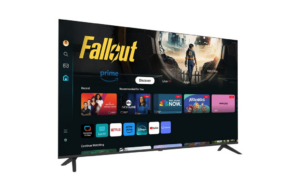
What Is a Mini LED TV and How Does It Work?
So, what is a Mini LED TV? The term primarily describes the television’s backlighting technology. Instead of relying on comparatively larger conventional LEDs, Mini LED displays use much smaller LEDs in the backlight. Their smaller size allows manufacturers to arrange more light sources across the display and divide the backlight into independently controlled areas.
This approach is important because LCD panels do not generate light independently. The backlight illuminates the panel, while local dimming can adjust different areas according to the image being displayed. Bright sections can receive more light while darker areas receive less, improving the separation between highlights and shadows.
The result is particularly relevant to HDR content. HDR is designed to represent a broader range between dark and bright portions of an image, so precise backlight control can help a display reproduce these differences more effectively.
Mini LED vs. Conventional LED Backlighting
The basic principle behind both technologies is similar: LEDs provide illumination behind an LCD panel. The major difference lies in the size and arrangement of the LEDs and the level of backlight control available.
Conventional LED televisions can use different backlight arrangements. Edge LED, for example, places LEDs around the edges of the screen, while full-array LED places LEDs across the back of the panel. Full-array designs can already provide more localized brightness control than edge-lit configurations.
Mini LED takes the full-array concept further by using smaller and denser light sources. This allows the backlight to be divided into more precisely controlled areas. Consequently, Mini LED can improve contrast and reduce unwanted light spill around bright objects, although the exact result depends on the implementation, dimming algorithm, panel, and viewing conditions.
Why Mini LED Benefits Dark Scenes and HDR Content
Viewers who enjoy science-fiction films, dark-scene movies, or visually demanding games often pay close attention to contrast. A bright object against a dark background can expose weaknesses in backlight control because excessive illumination in surrounding areas may create a visible halo or blooming effect.
Mini LED’s smaller backlights and localized control can help manage this challenge. By adjusting different sections of the backlight more precisely, the display can maintain brighter highlights while keeping neighboring darker areas comparatively dim. This can contribute to stronger perceived contrast and clearer separation in challenging scenes.
However, Mini LED should not be presented as completely eliminating blooming. The LCD panel, optical structure, number of dimming zones, algorithms, and content all influence the final result. For buyers, examining the complete display specification is therefore more useful than judging the technology name alone.
How We Apply Mini LED Technology at NPC
At NPC, we use QD-MiniLED technology in the NPC-MiniLED 65M1. The display technology and backlight unit are both specified as QD-MiniLED, while the screen provides a 3840 × 2160 resolution for 4K content.
The model incorporates 198 backlight zones and a 60Hz refresh rate. Its contrast ratio is specified at greater than 1,000,000:1, supporting our focus on strong contrast for entertainment-oriented applications. The television also offers a color gamut exceeding 85% NTSC.
Viewing flexibility is another consideration for larger displays. The NPC-MiniLED 65M1 provides a 178°/178° typical horizontal and vertical viewing angle. This can be useful in shared viewing environments where audiences are not always positioned directly in front of the screen.
What Is a Mini LED TV Suitable For?
For anyone asking what is a Mini LED TV in practical terms, it is useful to think of it as an LCD television that uses a more advanced, fine-grained LED backlight system. Its strengths are particularly relevant to applications where contrast, brightness control, and HDR-oriented image presentation are important.
At NPC, we position our Mini LED solutions for users who appreciate visually demanding content, including dark cinematic scenes and AAA gaming experiences. The NPC-MiniLED 65M1 also supports Netflix, Prime Video, and YouTube, while its smart TV configuration incorporates ThinQ AI and Samsung Tizen OS compatibility as specified for the product.
Moving Toward More Precise Display Experiences with NPC
At NPC, we develop smart TV solutions around practical viewing requirements and modern display technologies. The NPC-MiniLED 65M1 combines QD-MiniLED technology, 4K resolution, 198 backlight zones, a greater-than-1,000,000:1 contrast ratio, and a greater-than-85% NTSC color gamut. We aim to provide display solutions suited to customers seeking detailed, high-contrast visual experiences.
Understanding what is a Mini LED TV helps buyers look beyond screen size and resolution when evaluating display products. Backlight architecture, local dimming, contrast, color performance, and viewing requirements all deserve consideration. Contact NPC today to discuss our Mini LED TV solutions and find a display configuration suited to your business needs.