

A high-quality television is more than a large screen with an attractive specification sheet. For distributors, retailers, hospitality projects, and other professional buyers, display quality must translate into a dependable viewing experience across different types of content. Understanding the core factors behind TV performance can also make supplier evaluation more systematic when comparing the best television manufacturers.
Resolution and Image Detail
Resolution determines how many pixels a television can display horizontally and vertically. Higher resolution can reveal finer details, particularly when screen size and viewing distance allow the difference to be perceived. Current TV markets are dominated by 4K models, making resolution an important baseline consideration for commercial buyers evaluating modern displays.
However, resolution should not be considered in isolation. A high pixel count cannot compensate for poor color reproduction, weak contrast, or inadequate image processing. Buyers should therefore evaluate resolution alongside the other characteristics that determine whether a television can actually present detailed content effectively.
Contrast and Black-Level Performance
Contrast describes the difference between the darkest and brightest portions of an image. Strong contrast helps scenes retain depth, especially when content contains both bright highlights and dark shadows. For movies, premium streaming content, and visually demanding applications, maintaining visible detail in darker areas is particularly important.
HDR performance makes this factor even more relevant. HDR systems depend on a television accurately translating brightness information from the source into visible output. TV testing methodologies therefore examine how closely a display follows the intended HDR brightness curve rather than judging brightness alone.
Color Accuracy and Color Range
Color quality has two related dimensions: the range of colors a television can reproduce and how accurately it reproduces them. A wide color gamut can support more saturated colors, while accurate calibration helps ensure that those colors appear closer to the intended content.
Professional TV evaluations measure factors such as white balance, color temperature, and color error. These measurements matter because inaccurate colors can affect the appearance of skin tones, landscapes, sports graphics, and other familiar visual references.
For buyers comparing the best television manufacturers, color performance should therefore be assessed using more than marketing terminology. Consistent image reproduction is more meaningful when selecting displays for repeated commercial deployment.
HDR Compatibility and Brightness
HDR can expand the visual range between dark and bright areas, but compatibility alone does not guarantee convincing results. The display must be capable of handling HDR signals appropriately while maintaining suitable brightness, contrast, and color performance.
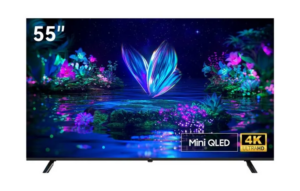
This is particularly relevant for streaming-focused televisions. Our NPC-MiniLED 55M1 supports HDR compatibility and is positioned as a smart TV solution for contemporary entertainment applications. Its listed compatibility also includes NETFLIX, Prime Video, YouTube, and ThinQ AI, giving buyers a clearer picture of its intended smart-TV ecosystem.
Viewing Angles for Shared Spaces
Viewing position becomes important when a television serves several people rather than a single viewer sitting directly in front of the screen. As viewers move away from the center, some displays experience changes in color, brightness, black levels, or gamma.
Independent TV testing treats viewing angle as a measurable aspect of picture quality and notes its particular importance in rooms with multiple seating positions. For hotels, meeting areas, family rooms, and other shared environments, buyers should therefore consider how consistently the image performs across the intended seating area.
Smart Platform and Content Access
A modern television is also a connected computing device. The operating system influences how users access applications, manage content, and interact with smart functions. For business buyers, the platform can affect product positioning, user experience, and the suitability of a model for particular markets.
Our NPC-MiniLED 55M1 uses Samsung TizenOS TV and has a Chasis listed as NT72690. Its Digital TV or ATV specification is Digital TV. These details provide useful technical information for distributors and project buyers assessing whether a model fits their planned product portfolio.
Processing and Overall System Integration
The final factor is how effectively the television’s hardware and software work together. Resolution, HDR, color, smart functions, and content services all contribute to the final user experience, but their value depends on coordinated system performance.
This is why buyers should avoid judging a television from one specification alone. The best television manufacturers typically need to address display characteristics, processing, connectivity, software, and product reliability as an integrated system. For business purchasing, this broader evaluation can reduce the risk of selecting a display that looks impressive on paper but does not match the intended application.
Making the Right Choice for Commercial TV Sourcing
For professional buyers, television selection is ultimately about matching technical characteristics with the actual use case. Resolution helps determine image detail, while contrast, color, HDR, viewing angles, smart functionality, and processing collectively shape the viewing experience.
At NPC, we are a technology manufacturing enterprise specializing in smart TVs, monitors, and computing products. We develop display solutions for customers evaluating performance and product functionality together rather than focusing on a single specification. Our NPC-MiniLED 55M1 combines a 55-inch MiniLED smart-TV platform with Samsung TizenOS TV, Digital TV support, HDR compatibility, and access to major entertainment platforms listed for the model.
For distributors and other professional buyers comparing the best television manufacturers, a structured evaluation of these seven factors can provide a practical starting point. Contact NPC today to discuss smart TV solutions for your product portfolio and sourcing requirements.