

Choosing a business laptop is about more than comparing processor names or screen sizes. For companies, a suitable device must support everyday productivity while balancing performance, reliability, battery endurance, and physical durability. These factors directly influence employee efficiency and the long-term value of an IT investment. When evaluating the best laptop manufacturers, business buyers should therefore consider the complete device rather than focusing on one specification.
Performance Should Match the Workload
Performance is the first consideration because a laptop must handle the applications employees actually use. Business users may work with browsers, office applications, communication platforms, spreadsheets, cloud services, and other productivity tools simultaneously. Intel notes that processor power, RAM, storage, and graphics capabilities should be matched to the workload rather than selected without considering how the device will be used.
That makes workload assessment an important procurement step. A laptop designed for routine office work does not necessarily need workstation-level hardware, while demanding applications such as 3D modeling, video editing, or advanced data analysis require substantially more computing resources. The best laptop manufacturers understand that business devices should be configured around practical use cases and not simply maximum specifications.
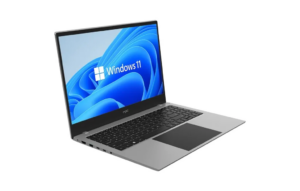
The NPC N14 illustrates this balanced approach. We equip it with an Intel® Processor N100 featuring 6M Cache, up to 3.40 GHz, and 4 cores/4 threads. This configuration is positioned for everyday business computing where responsive productivity and practical efficiency matter more than specialized high-performance workloads.
Reliability Supports Consistent Productivity
Reliability is particularly important for organizations managing multiple employee devices. A laptop that frequently experiences performance problems can interrupt workflows, increase support requirements, and create unnecessary downtime. Intel’s guidance for small-business computing recommends considering reliability and stable platforms alongside performance, security, and manageability when selecting business computers.
For procurement teams, reliability should therefore be viewed as a combination of dependable hardware, appropriate specifications, and sensible operating conditions. Buyers should consider whether a device is properly matched to its intended workload and whether its design can support regular business use.
This is also where product construction becomes relevant. At NPC, we use a Metal+Engineering Plastic housing for the N14. This construction combines two materials within the laptop housing, supporting a practical balance between structural considerations and everyday usability. For businesses purchasing laptops in quantity, physical design deserves attention alongside internal components.
Battery Life Matters Beyond the Office
Mobility has become an ordinary part of business computing. Employees may move between meeting rooms, offices, customer locations, classrooms, or home workspaces, making dependable battery endurance an important purchasing criterion. Intel identifies laptop battery life as critical for employees working away from power outlets and recommends considering power-efficient hardware platforms when purchasing new devices.
Battery performance should also be evaluated realistically. Actual endurance can vary according to workload, software, display settings, connectivity, and other operating conditions. Buyers should therefore treat published endurance figures as a useful reference rather than assuming identical results across every business scenario.
For the NPC N14, we specify a lithium-ion polymer battery rated at 7.6V/45.6Wh, with an endurance time of 6–8 hours. This gives business buyers a clear reference point when planning mobile work requirements, while the actual operating time will naturally depend on how the laptop is used.
Build Quality Completes the Business Laptop Equation
A laptop can have capable internal hardware but still be unsuitable for organizational deployment if its physical design does not match the demands of daily use. Employees routinely carry laptops between locations, place them into bags, and use them across different work environments. Build quality is therefore part of the overall value calculation rather than a purely aesthetic consideration.
The housing material is one visible part of that equation. At NPC, we use Metal+Engineering Plastic for the N14 housing, giving procurement teams a clearly defined construction specification. Buyers evaluating the best laptop manufacturers should examine this type of detail together with processor configuration, battery capacity, display specifications, and the intended workload.
Display Quality Also Shapes Daily Productivity
The screen is another important part of the working experience because employees may spend several hours reading documents, reviewing spreadsheets, joining meetings, or working with web-based applications. A suitable business display should provide enough resolution and a comfortable viewing experience for its intended tasks.
The NPC N14 uses an FHD 1920×1080 IPS display. This specification provides a clear Full HD resolution and an IPS panel type, giving buyers concrete information to compare when building a business laptop fleet. Rather than evaluating screen size alone, procurement teams can consider resolution and panel technology alongside the applications employees use.
Making a More Complete Procurement Decision
There is rarely one specification that defines a great laptop. Performance determines whether the system can handle the workload, battery life affects mobility, reliability influences operational continuity, and build quality contributes to long-term usability. Display characteristics also matter because they shape the everyday employee experience.
For procurement teams comparing the best laptop manufacturers, a balanced evaluation can make the selection process more practical. Instead of chasing the highest specification in every category, businesses can identify the requirements that matter most to their workforce and select devices accordingly. Intel similarly recommends choosing business computers according to employee needs, workloads, form factor, and future requirements.
Choose a Balanced Laptop for Business Needs
At NPC, we develop laptop solutions with practical business requirements in mind. Our N14 combines an Intel® Processor N100, FHD 1920×1080 IPS display, 7.6V/45.6Wh lithium-ion polymer battery, 6–8-hour endurance specification, and Metal+Engineering Plastic housing in one business-oriented configuration. We focus on providing clear specifications that help organizations evaluate devices against their actual deployment needs.
If your business is evaluating laptops for office teams, mobile employees, education, or other professional applications, contact NPC to discuss a laptop configuration suited to your procurement requirements.