

A laptop is the result of careful integration between computing hardware, display technology, power systems, and physical design. For business buyers, understanding how these elements work together makes it easier to evaluate products beyond their appearance or headline specifications. Laptop computer manufacturers must balance performance, portability, thermal considerations, battery capacity, and usability within a limited physical space.
The Motherboard as the Laptop’s Central Platform
The motherboard is the primary circuit board that connects major computing components and provides the electrical pathways between them. Intel explains that a motherboard typically integrates or connects the processor, memory, chipset, and other essential components, while its form factor influences the available space and layout.
Laptop motherboards require particularly careful engineering because space is limited compared with conventional desktop systems. Components must be arranged to accommodate processing hardware, memory, storage, connectivity, power delivery, and cooling within a compact chassis.
This makes motherboard design an important consideration for laptop computer manufacturers. A smaller internal layout cannot simply be treated as a scaled-down desktop design. Component placement, electrical connections, thermal management, and available space all need to work together as part of one system.
How the Processor and Memory Support Daily Computing
The processor executes instructions and coordinates computing tasks, while RAM provides temporary working space for data used by applications. Intel notes that processors and RAM have different but complementary roles in computer performance and productivity.
For business laptops, this relationship matters because employees often work across multiple applications at once. Documents, browser tabs, communication platforms, spreadsheets, and other software can place simultaneous demands on system resources. The appropriate processor and memory configuration therefore depends on the intended workload rather than on one specification considered in isolation.
The motherboard provides the infrastructure through which these components communicate. Intel also notes that modern laptop CPUs are often soldered directly to the motherboard because of space constraints, illustrating how laptop architecture differs from many desktop systems.
Display Design Goes Beyond Screen Size
The display is one of the most visible parts of a laptop, but its design involves more than simply selecting a particular diagonal measurement. Resolution, panel technology, aspect ratio, brightness, and physical integration all affect how the screen functions in a professional environment.
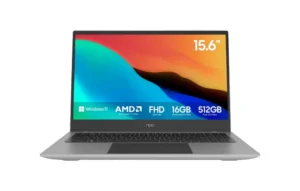
The NPC N16s uses a 15.6-inch 16:9 display with FHD resolution of 1920×1080 and an IPS panel. This configuration provides a clearly defined screen specification for businesses evaluating laptops for general professional use, office applications, communication, and content viewing.
Display integration also affects the overall physical design. The panel, hinges, bezel, cables, and surrounding housing must fit together while maintaining the intended dimensions. This is one reason industrial design and engineering decisions are closely connected in laptop development.
Why the Battery Is a Major Part of Laptop Design
A portable computer needs an energy source that fits within the available chassis while supplying power for its operating components. Battery selection therefore influences both internal layout and practical mobility.
The NPC N16s uses a lithium-ion polymer battery rated at 11.4V and 55Wh. Its specified endurance time is 6–8 hours. Actual operating time can vary according to workload, software, display settings, connectivity, and other usage conditions, so businesses should treat endurance figures as product specifications rather than universal guarantees.
Battery engineering also involves safety and durability considerations. The U.S. Department of Energy describes how rechargeable battery performance depends on interactions among electrodes, electrolytes, and other material characteristics, demonstrating why battery design is a specialized engineering field.
Housing and Dimensions Complete the Engineering Picture
The external housing protects internal components while establishing the laptop’s physical size and appearance. Material selection can influence weight, rigidity, manufacturing requirements, and how internal components are packaged.
The NPC N16s uses an engineering plastic housing and measures 358.5 × 240.5 × 18.05 mm. These specifications illustrate how laptop design involves fitting the display, motherboard, battery, and other components into a relatively thin enclosure.
For laptop computer manufacturers, achieving a compact form factor requires coordination between mechanical and electronic engineering. Internal components cannot be designed independently because changes to one area can affect available space, heat management, structural design, or overall dimensions.
Why Component Integration Matters to Business Buyers
Business buyers should evaluate laptops as complete systems rather than as collections of isolated specifications. A powerful processor may not deliver the intended experience if other components or the physical design cannot support the target workload. Likewise, a large display or battery needs to fit the organization’s requirements for portability and workspace use.
This system-level approach is particularly relevant when businesses source equipment in volume. Laptop computer manufacturers need to consider consistent product construction, component integration, and manufacturing requirements alongside individual specifications.
At NPC, we understand that business laptop design requires this balance. Our NPC N16s combines an engineering plastic housing, 15.6-inch FHD IPS display, and lithium-ion polymer battery rated at 11.4V/55Wh in a 358.5 × 240.5 × 18.05 mm chassis. We develop products with the practical requirements of professional computing environments in mind.
For organizations evaluating laptop computer manufacturers, understanding the relationship between the motherboard, display, battery, and housing provides a stronger foundation for procurement decisions. Contact NPC to discuss the N16s and explore laptop solutions suited to your business requirements.