

Portability has become a key consideration for businesses and professionals who need reliable computing power across different working environments. Whether employees work remotely, travel frequently, or move between offices, a laptop must provide a balance between performance, durability, and convenience. A lightweight Windows laptop is designed to address these needs by combining efficient hardware with a compact structure that supports flexible productivity.
Creating a portable laptop requires careful engineering decisions. Manufacturers need to consider materials, battery capacity, processing performance, storage solutions, and overall design efficiency. At NPC, we focus on developing laptop solutions that provide practical performance and mobility for business users. By understanding the factors behind portability, companies can better evaluate which devices meet their operational requirements.
Design and Materials Influence Laptop Portability
The physical structure of a laptop directly affects how easy it is to carry and use in different locations. Engineers must balance size, weight, durability, and manufacturing efficiency when designing a portable computer. The choice of housing material plays an important role because it impacts both protection and overall device weight.
Many modern laptops use lightweight engineering materials to achieve a thinner profile while maintaining structural reliability. A well-designed housing protects internal components while allowing users to transport the device comfortably during business trips, meetings, or daily commuting.
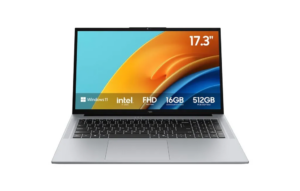
The NPC T17s Laptop features an engineering plastic housing and measures 398.0 × 252.0 × 19.9 mm. Its 17.3-inch display provides a larger viewing area for office work and multitasking, making it a practical option for users who prioritize screen space in home or office environments. Buyers who frequently carry a laptop should also consider the device’s weight and overall dimensions when assessing portability.
Display Size and Visual Experience Need a Practical Balance
A portable laptop should provide enough screen space for productive work while remaining convenient to carry. Display selection involves balancing viewing comfort, workspace requirements, power consumption, and overall device dimensions.
For business users, a larger screen can improve efficiency when working with documents, spreadsheets, presentations, and online collaboration platforms. However, excessive screen size may reduce portability. Therefore, many laptop designs focus on creating a comfortable viewing experience within a compact structure.
The NPC T17s Laptop is designed with a practical display configuration that supports professional tasks while maintaining portability. A well-balanced screen design helps users work efficiently in offices, meeting rooms, transportation environments, and other flexible workplaces.
When selecting a lightweight Windows laptop, businesses should evaluate whether the display size matches their users’ working habits. A device should provide enough visual space for productivity while remaining easy to transport throughout the day.
Processor Performance Supports Mobile Productivity
Portability does not only depend on physical design. A modern laptop must also deliver sufficient computing capability while maintaining energy efficiency. The processor is one of the most important components because it influences application performance, multitasking ability, and power consumption.
Business users often require laptops that can handle multiple tasks, including office software, online communication, data management, and professional applications. A suitable processor allows users to complete daily workloads efficiently without relying on stationary workstations.
At NPC, we equip the NPC T17s Laptop with an Intel® Core™ i7-1255U Processor featuring a 12M Cache, up to 4.70GHz frequency, and 10 cores/12 threads. This configuration provides strong processing capability for professional productivity scenarios while supporting mobile computing requirements.
The laptop also integrates Intel® Iris® Xe Graphics eligible, which provides additional graphics performance for visual applications, multimedia tasks, and general creative workflows. For businesses seeking a lightweight Windows laptop, combining efficient processing with capable graphics support is essential for achieving a flexible user experience.
Battery Life Determines Real-World Mobility
A truly portable laptop needs reliable battery performance because users often work away from fixed power sources. Battery design involves more than selecting a battery with higher capacity. Engineers must also optimize power consumption across processors, displays, storage systems, and other hardware components.
Longer battery endurance allows professionals to participate in meetings, travel, and complete daily tasks with fewer interruptions. This is especially important for businesses that support flexible working models or frequently require employees to operate in different locations.
The NPC T17s Laptop uses a lithium-ion polymer battery with an 11.4V/55Wh capacity. Under suitable usage conditions, it provides an endurance time of 6–8 hours. This battery configuration supports everyday mobile productivity while maintaining a balanced product design.
Storage and Memory Improve Everyday Efficiency
Fast and reliable storage contributes significantly to the overall laptop experience. Traditional storage limitations can affect system responsiveness, application loading speeds, and file management efficiency. Modern laptops often use SSD technology to provide faster data access and smoother operation.
Memory capacity is also important for users who frequently switch between multiple applications. Sufficient RAM allows systems to manage multitasking more effectively, improving productivity in professional environments.
The NPC T17s Laptop features DDR4 SO-DIMM×2 memory with 16GB 3200MHz RAM and an M.2 2280 512GB SSD. This combination provides responsive performance for daily business operations, including document processing, communication tools, and other productivity applications.
Building Portable Computing Solutions for Modern Businesses
A truly portable laptop requires a combination of thoughtful design, efficient hardware, and reliable performance. Factors such as housing materials, processor capability, battery endurance, memory, and storage all contribute to creating a device that supports users in different working environments.
For companies evaluating a lightweight Windows laptop, portability should be viewed as a complete experience rather than simply a smaller size or reduced weight. The ideal device should allow users to remain productive while moving between locations without compromising essential computing functions.
At NPC, we develop professional laptop solutions designed to support business and commercial applications. Our NPC T17s Laptop integrates engineering plastic housing, Intel® Core™ i7-1255U Processor, Intel® Iris® Xe Graphics eligible, 16GB DDR4 memory, 512GB SSD storage, and a 55Wh lithium-ion polymer battery to deliver balanced performance and mobility. Contact NPC today to explore customized laptop solutions that meet your business computing needs.