

Portability defines modern mobile computing, yet trimming physical bulk requires complex mechanical trade-offs. Shaving millimeters off a clamshell chassis is never just about squeezing parts together; it demands redesigning internal silicon, adopting structural alloys, and compacting optical display assemblies. Knowing which physical subsystems drive weight loss helps commercial purchasers and enterprise evaluators spot truly engineered mobility.
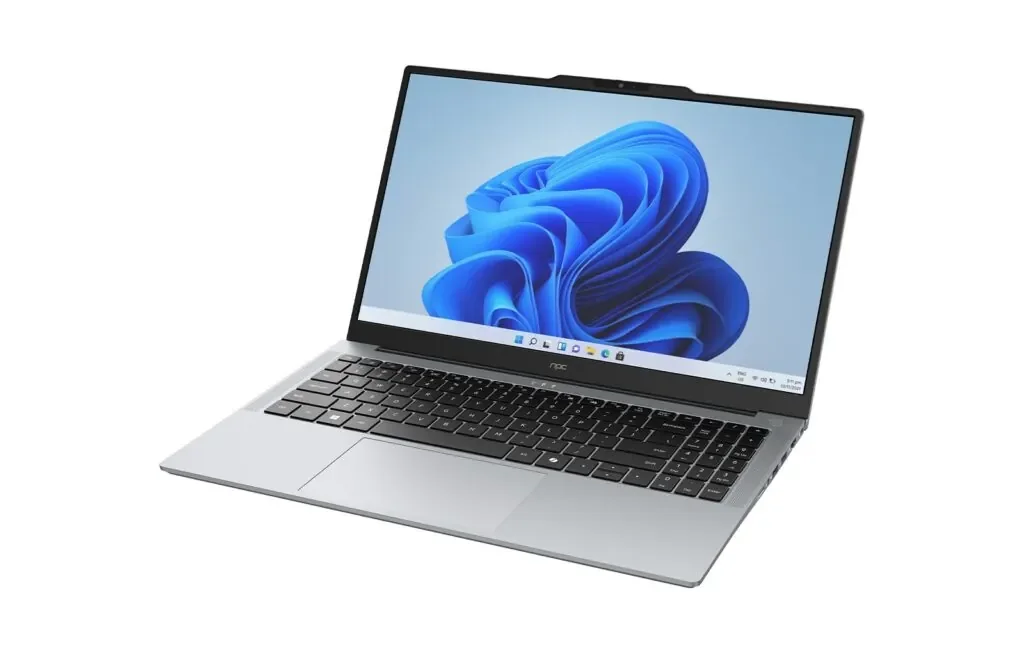
Silicon Consolidation and Efficient Processor Architectures
Central processors dictate internal thermal layouts and cabinet clearance. Earlier mobile computers relied on separate platform controller hubs, discrete graphics chips, and dedicated memory controllers spread across wide printed circuit boards. Contemporary mobile platforms consolidate these processing units into unified System-on-Chip designs.
Power efficiency shapes internal dimension limits. Processors operating with balanced thermal profiles—such as Intel Core U-series, Intel Core Ultra, and AMD Ryzen U-series—produce manageable thermal output under typical office workloads. Reduced heat output eliminates heavy copper fin stacks, thick heat pipes, and large fan housings. Designers can implement flat, compact vapor cooling paths, keeping entire machine bases under 19 millimeters in profile.
Consolidated graphics engines further streamline motherboard space. Modern integrated graphics handle 4K external streaming, dual-monitor desktop extension, and hardware-accelerated media decoding directly inside processor silicon. Removing standalone graphics boards and separate video memory chips saves significant physical territory on the main PCB.
Structural Metallurgy and Lightweight Housing Materials
Chassis fabrication directly determines durability when wall thickness drops below two millimeters. Standard consumer plastics require thicker cross-sections to resist flex around keyboard decks and hinges, which adds unnecessary grams. Structural engineering has shifted toward engineered plastics, aluminum alloys, and magnesium-aluminum blends to maintain rigidity at reduced thicknesses.
Precision tooling allows structural walls to remain rigid without excess mass. Stamped aluminum lid covers shield delicate liquid crystal layers against torsional twisting during travel. Reinforced engineering plastics around the lower deck provide steady impact resistance while absorbing keystroke vibration.
Composite chassis architecture distributes functional loads effectively. Metal top covers bear exterior pressure inside backpacks, while reinforced composite bottom plates keep overall chassis weight near 1.4 kilograms on standard 14-inch platforms. Combining dissimilar materials in targeted stress areas maintains structural integrity without adding unnecessary heft.
High-Density Lithium-Polymer Chemistry and Internal Packaging
Battery hardware has undergone a major physical transformation over the last decade. Older portable computers relied on rigid, cylindrical 18650 lithium-ion cells that dictated thick, bulging battery compartments. Those rigid shapes prevented engineers from building flat, unified wedge profiles.
Laminated lithium-ion polymer pouch cells eliminate wasted space inside base enclosures. Pouch cells can be manufactured in thin rectangular sheets, allowing battery packs to rest directly beneath palm rests and trackpads. Cells operating at 11.4 V deliver 55 Wh capacities in packages only a few millimeters thick, keeping runtimes long without bloating the chassis.
High-Density Interconnect (HDI) printed circuit boards complement these flat batteries. Multi-layer PCB routing packs micro-controllers, solid-state M.2 storage slots, and dual Type-C controllers into minimal board footprints. Concentrating essential electronics into a compact mainboard frees valuable internal volume for battery placement.
Ultra-Thin IPS Panel Stacks and Bezel Reduction
Display engineering plays an equally vital role in reducing overall machine size. An ultra-portable display lid integrates optical polarizing films, liquid crystal layers, light-guide plates, and LED backlights within a package measuring only a few millimeters thick. Advancements in thin-glass substrates and edge-lit light diffusion prevent screen lids from flexing or bowing.
Shrinking display bezels alters the entire footprint of a thin lightweight laptop. Narrow border engineering reduces excess plastic around 14.1-inch and 15.6-inch Full HD panels, allowing larger display areas to fit inside smaller, more compact bags. A 16:9 aspect ratio panel housed in micro-edge borders maximizes workspace without increasing exterior dimensions.
Compact friction hinges keep the upper lid anchored securely without taking up base space. Internal display wiring harnesses and Wi-Fi antenna cables route directly through narrow hinge barrels into the main chassis. Consolidating the hinge assembly ensures smooth lid opening while keeping profile lines clean and continuous.
Selecting a capable thin lightweight laptop comes down to balancing these specialized components—paired processors, compact batteries, rigid materials, and thin panels—against everyday connectivity and operational durability.
Slim Form-Factor Engineering from NPC
At NPC, our manufacturing operations focus on engineering balanced mobile computing platforms tailored for global distributors and commercial brands. We produce portable laptops spanning 14-inch ultra-portables at approximately 1.4kg up to 17.3-inch desktop replacements, maintaining slim profiles starting from 18.05mm. Configured with certified Intel Core, Intel Core Ultra, or AMD Ryzen platforms, our models integrate Full HD IPS screens, versatile Type-C ports, and reliable 55Wh lithium-polymer batteries.
Every production batch from NPC is backed by a structured two-year warranty covering core components—including processors, motherboards, memory, displays, and battery packs. Contact our commercial OEM and ODM team at NPC to review detailed chassis options, examine hardware configuration matrices, or request evaluation units for your upcoming regional distribution programs.