

Walk through any modern electronics showroom and most display screens look virtually identical on the outside. Slim black bezels, polished pedestal stands, and recognizable streaming interfaces dominate both standard displays and premium flagships. Software menus alone cannot reveal the underlying optical mechanisms that dictate actual picture quality across diverse home environments.
Optical performance diverges dramatically once the screen powers on in a darkened room. Standard smart sets often produce grayish shadows and visible light leakage around bright on-screen text. High-performance displays resolve these compromises by systematically restructuring how light is generated, diffused, and controlled behind the liquid crystal glass.
Diode Scale and Density: Rethinking the Liquid Crystal Backlight
Conventional flat-panel televisions utilize direct-lit (DLED) or edge-lit backlight configurations behind the LCD panel. Direct-lit designs position dozens of standard-sized light-emitting diodes across the rear chassis, while edge-lit frames position diodes strictly along the perimeter. Both methods distribute illumination across broad panel segments simultaneously, limiting their capacity to produce high contrast.
Miniaturized diodes fundamentally transform this internal lighting geometry. Rather than using conventional millimeter-scale light emitters, engineers pack thousands of micro-scale diodes into a dense, tightly grouped grid directly behind the pixel layer. Shrinking the physical footprint of each diode creates a finely segmented illumination matrix across the entire chassis.
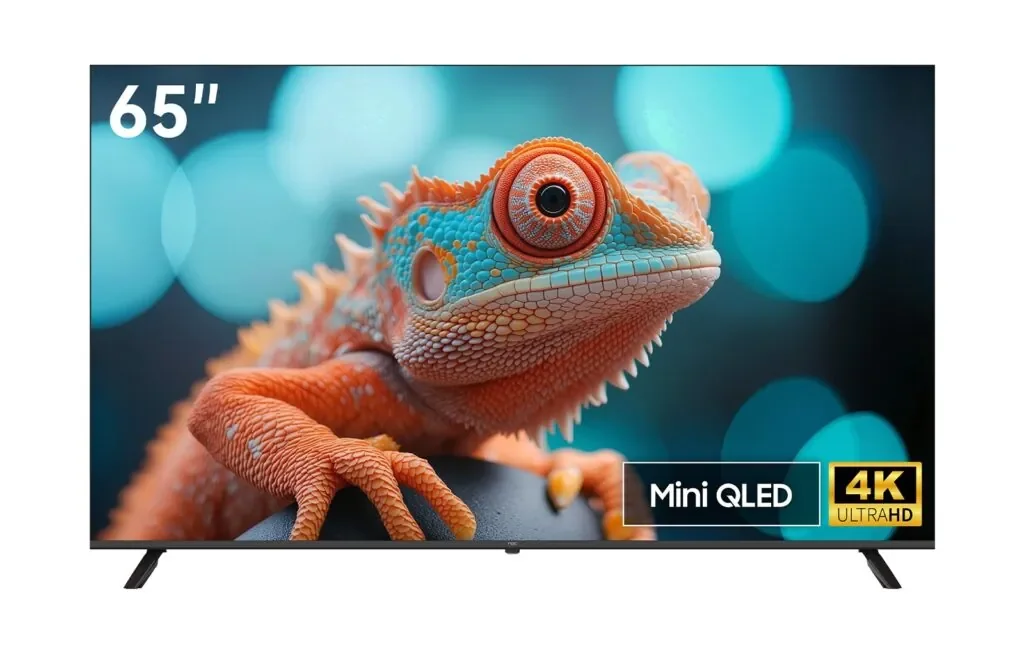
Choosing a mini LED smart TV gives viewers access to this tightly packed optical structure without sacrificing connected platform capabilities. Placing thousands of miniature illumination sources across the rear housing allows the backlight to match the visual complexity of high-resolution digital media far more accurately than standard arrays.
Local Dimming Dynamics and Contrast Control
Precision backlight control depends on independent local dimming zones. Traditional televisions treat their backlights as single unified sources or divide them into a handful of coarse adjustment blocks. Subtitles appearing across a midnight-sky scene cause conventional backlights to illuminate broad screen sections, creating distracting halos and milky dark tones.
Segmented local dimming solves this visual artifact by turning off or dimming specific clusters of diodes where the picture is dark. Zones corresponding to deep shadows switch off, allowing liquid crystal cells to display deep darkness. Concurrently, adjacent zones beneath bright elements illuminate to their maximum output levels.
Dark movie sequences and atmospheric video games gain remarkable depth from this localized brightness control. Light blooming around bright logos, streetlamps, and starry skies drops significantly compared to regular backlights. Preserving deep black levels elevates perceived image sharpness across every frame of high-definition video.
Color Enhancement Layers and High Dynamic Range Rendering
Enhanced backlights frequently work in tandem with advanced color layers. While regular screens rely on basic color filters to generate red, green, and blue sub-pixels, premium configurations insert Quantum Dot (QLED) enhancement films directly between the miniature diodes and the liquid crystal matrix.
Adding Quantum Dot materials allows the display to purify the blue backlight into highly saturated red and green wavelengths. Combining dense backlighting with quantum dot chemistry yields QD-MiniLED panels capable of rendering broad color gamuts. Colors appear rich and natural rather than oversaturated, flat, or washed out.
Dynamic range performance improves correspondingly under this multi-layer design. High peak luminance values permit High Dynamic Range formats like HDR10+ to display dazzling specular highlights without clipping delicate shadow gradients. Daytime living rooms with expansive windows benefit from the increased light output, keeping visual content clear against harsh ambient room reflections.
Processing Demands and Smart Platform Synergy
Operating thousands of individual backlight zones requires substantial computational horsepower. Dedicated image processors must analyze incoming video frames in real time, calculating exact brightness values for every dimming zone before liquid crystal shutters open. Mainboard chipsets like RTD2874 processors handle these intensive algorithmic calculations alongside multi-channel video decoding.
Certified operating platforms tie these hardware elements into a unified user experience. A modern mini LED smart TV integrates licensed systems like Samsung Tizen OS, LG webOS Hub, or Whale OS to deliver native streaming apps, voice navigation, and wireless casting. Powerful processing silicon helps navigation ribbons remain responsive while complex zone-dimming algorithms run in the background.
Display refresh rates must also keep pace with dynamic media sources. Panels operating at 120 Hz or 144 Hz refresh their images more than one hundred times per second, matching the high frame rates of modern gaming consoles and sports feeds. High-refresh panels maintain sharp motion clarity, while rapid zone-dimming drivers substantially curb trailing artifacts behind fast-moving objects.
Matching content sources prevents motion jitter across varied media formats. Cinematic movies recorded at 24 frames per second, broadcast television running at 30 frames, and competitive games at 60 or 120 frames align with responsive panel timing. Proper frame synchronization supports clean video rendering during fast action sequences.
Commercial Display Engineering and Custom Manufacturing
Developing advanced commercial display hardware represents the foundational mission of our team at NPC. Established in 2005 under Guangzhou Xianyou Electronics Group, our operations supply private-label brands and wholesale distributors across more than 70 international markets. Our display catalog spans 24-inch entry models up to expansive 100-inch smart screens incorporating DLED, QLED, and QD-MiniLED configurations.
Factory production lines at NPC adhere to strict panel binning standards, optical chamber evaluations, and comprehensive aging assessments. Every display model includes a 3-year warranty under normal operating conditions, giving international channel partners dependable hardware reliability. We offer flexible customization covering mainboard chipsets, bezel tooling, regional digital tuners, and certified operating systems.
Connecting with our engineering division at NPC gives procurement managers direct access to scalable production lines and container-volume pricing. Reach out to our technical sales representatives today to review hardware specification sheets, discuss regional market compliance, and request evaluation display units for your commercial distribution network.