

Portable computers have become essential tools for business operations, education, communication, and personal productivity. Behind every lightweight laptop is a complex process involving industrial design, component selection, engineering validation, and manufacturing coordination. Understanding how laptops are designed and built helps businesses evaluate the capabilities of different suppliers and identify reliable partners among global laptop manufacturers.
From the initial concept stage to final assembly, laptop production requires close integration between hardware engineering, software optimization, and quality control. At NPC, we focus on developing laptop solutions that combine practical design, reliable performance, and user-oriented features to meet the needs of different application scenarios. By understanding the major components and development process, businesses can better select suitable computing products for their markets.
Product Design Begins with Structure, Materials, and User Requirements
The design process of a laptop starts by defining the intended usage environment and performance expectations. Engineers must consider factors such as portability, durability, heat management, battery life, and manufacturing efficiency before creating the final product structure.
The housing design is an important part of this process because it affects both appearance and durability. Materials must provide sufficient protection for internal components while keeping the device lightweight. Many laptop manufacturers evaluate different material options, including plastics, metals, and composite materials, depending on product positioning and cost requirements.
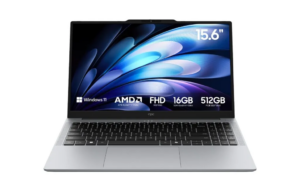
At NPC, we develop the NPC N16s Laptop with an engineering plastic housing that balances structural stability and lightweight portability. The product dimensions are 358.5×240.5×18.05mm, creating a slim profile suitable for mobile working environments. This approach allows businesses to provide users with a practical laptop design that supports everyday productivity.
Display Technology Plays a Key Role in Laptop Performance
The display is one of the most visible components of a laptop and directly influences user experience. Engineers must consider screen size, resolution, panel technology, viewing comfort, and power consumption when designing a laptop display system.
Modern business users often require clear visuals for documents, presentations, video meetings, and digital content. A Full HD IPS panel has become a common choice because it can provide detailed images and wider viewing angles compared with traditional display technologies.
The NPC N16s Laptop features a 15.6-inch 16:9 display with FHD (1920×1080) IPS resolution. This configuration provides a spacious working area for multitasking while maintaining image clarity. For companies sourcing from laptop manufacturers, display specifications are an important factor when matching devices with different professional and commercial applications.
Processing Components Determine Computing Capability
The processor is the core component that determines how efficiently a laptop handles different workloads. During the design stage, engineers select processors based on performance targets, energy efficiency, thermal requirements, and product positioning.
Business laptops need to support a wide range of activities, including office applications, online communication, data processing, and multitasking. The balance between computing power and power consumption is especially important because portable devices depend on battery operation.
At NPC, we equip the NPC N16s Laptop with an AMD Ryzen™ 7 7730U processor featuring 8 cores and 16 threads, with operating frequencies ranging from 2.3GHz to 4.5GHz. This processor configuration helps deliver responsive performance for professional workflows and daily productivity tasks.
Graphics capability is another important consideration. The NPC N16s Laptop integrates AMD Radeon™ Graphics, providing suitable visual processing support for business applications, multimedia tasks, and general content creation needs.
Battery Systems and Power Efficiency Support Mobility
Battery design is a major challenge in laptop development because manufacturers must provide sufficient operating time while maintaining compact product dimensions. Engineers need to balance battery capacity, component efficiency, thermal management, and software optimization.
The battery system affects how users interact with their devices, especially for professionals who frequently work away from fixed power sources. A reliable laptop should offer enough endurance for meetings, travel, and flexible working environments.
The NPC N16s Laptop uses a lithium-ion polymer battery with an 11.4V/55Wh capacity. Its endurance time reaches 6–8 hours under suitable usage conditions, supporting mobile productivity scenarios. By considering both hardware efficiency and battery performance, laptop manufacturers can create products that better meet modern mobility requirements.
Manufacturing Process Requires Precision and Quality Control
After completing the engineering design, laptops move through manufacturing stages that include component sourcing, assembly, testing, and quality inspection. Each step requires strict coordination because a laptop contains many interconnected components, including the motherboard, display module, battery system, keyboard, storage devices, and cooling structures.
Quality control is essential throughout production. Manufacturers conduct functional tests to verify system stability, hardware performance, and compatibility between components. These procedures help reduce potential failures and ensure consistent product quality.
At NPC, we combine design experience with manufacturing capabilities to develop reliable laptop products for business customers. Our approach focuses on integrating carefully selected components, practical engineering solutions, and production standards to support different market requirements.
Building Better Laptop Solutions Through Integrated Engineering
Laptop development is a combination of industrial design, component engineering, manufacturing expertise, and quality management. From the housing material and display panel to the processor and battery system, every element influences the final user experience.
For businesses working with laptop manufacturers, understanding these components provides valuable insight when selecting products and suppliers. A well-designed laptop should not only deliver strong specifications but also provide reliability, usability, and adaptability for different environments.
At NPC, we provide professional computing solutions designed for commercial and business applications. Our NPC N16s Laptop combines engineering plastic housing, a 15.6-inch FHD IPS display, AMD Ryzen™ 7 7730U processor, AMD Radeon™ Graphics, and a 55Wh lithium-ion polymer battery to support efficient and flexible computing needs. Contact NPC today to discuss your laptop requirements and explore customized solutions for your market.