

Sustained office productivity depends on hardware that handles demanding software suites without thermal throttling or travel fatigue. Specifying high performance work laptops requires looking beyond generic marketing terms to analyze how processor architecture, physical screen scale, and peripheral ports coordinate across daily business operations. Evaluating these internal and external capabilities ensures business deployments maintain steady performance across diverse enterprise routines.
Processing Architecture: Single-Core Snappiness vs. Multi-Threaded Throughput
Silicon architecture determines how smoothly a portable system runs routine administrative tools and computationally heavy enterprise software. Professional buyers generally balance deployment strategies between Intel and AMD processing platforms depending on immediate workflow demands.
Intel Core platforms—spanning configurations such as the i3 1215U/1315U, i5 1235U/1335U, and i7 1255U/1355U, as well as Intel Core Ultra chips like the Ultra 5 125U/125H and Ultra 7 155H—deliver prominent single-core performance.
This high per-core execution speed provides snappy menu responses, fast application launches, and smooth operation across basic office applications, document editing suites, and web platforms.
AMD Ryzen series processors—including the Ryzen 5 5500U, Ryzen 5 7430U, Ryzen 7 7730U, Ryzen 3 8440U, Ryzen 5 8640U, Ryzen 5 8640HS, Ryzen 7 8840U, and Ryzen 7 8840HS—offer notable advantages in multi-core and multi-threaded throughput. These parallel architectures excel when handling large data compilations, content creation rendering, and concurrent application execution. Pairing the right silicon foundation with Windows 11 allows users to tailor computational power directly to their day-to-day organizational demands.
Display Scale and Ergonomics Across Core Form Factors
Screen dimensions establish the boundary between daily visual comfort and practical carrying weight. Selecting panel dimensions requires evaluating whether staff primarily operate at fixed workstations or commute between dynamic client meetings.
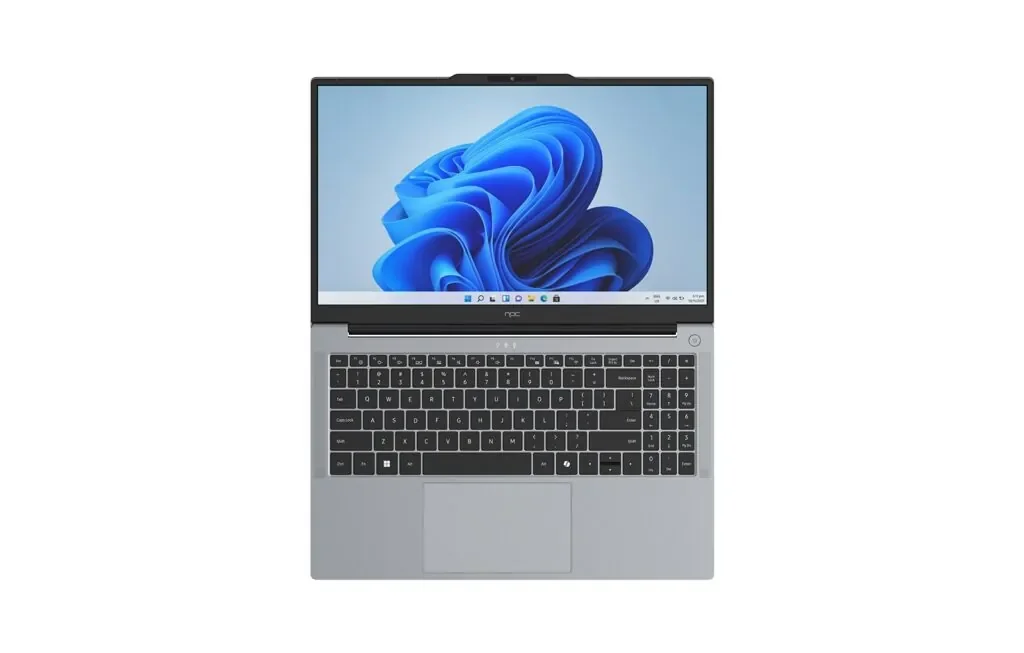
An ultra-portable 14-inch format, typically weighing around 1.4kg, minimizes carrying strain for mobile executives, field consultants, and regular business travelers. The 15.6-inch form factor serves as the mainstream commercial standard, delivering a balanced compromise between workable screen area and physical transportability.
Expansive 16-inch and 17.3-inch chassis configurations optimize immersion for fixed office setups, detailed spreadsheet verification, and graphic design tasks. While 17.3-inch panels introduce greater overall weight, their expansive display area minimizes ocular strain during lengthy operational shifts. Integrating FHD (1920×1080) IPS panels ensures consistent color fidelity and wide viewing angles across varied office lighting.
Physical Interface Layouts and Peripheral Data Flow
Workplace versatility hinges on integrated physical ports that connect secondary displays, mass storage drives, and corporate network adapters without awkward external dongles. Built-in full-sized HDMI outputs let presenters project slide decks directly to boardroom televisions, desktop monitors, and conference projectors.
Universal USB ports accommodate everyday peripherals, including input mice, external storage drives, and authorization dongles. Dual Type-C interfaces expand functionality by enabling rapid device-to-device communication, facilitating immediate media transfers between tablets or smartphones and host systems.
Power management requires strict hardware compliance to safeguard internal motherboards against irregular voltage spikes. Using original factory-standard power adapters through the dedicated DCIN charging interface avoids device damage during heavy battery recharge cycles.
In mobile situations, multi-gesture Windows touchpads supporting one-to-four-finger operational shortcuts enable quick document navigation and window switching when external mice are unavailable.
Configuring high performance work laptops requires selecting balanced hardware where processor architectures, chassis sizes, and physical I/O ports complement actual enterprise tasks.
Grounding deployment decisions in these verified hardware specifications prevents workflow bottlenecks while extending device reliability over multi-year business cycles.
Certified Portable Hardware Manufacturing and Commercial Support
At NPC, we design and produce lightweight, high-performance notebook computers engineered to serve wholesale distributors, education tenders, and global enterprise partners.
Our production portfolio incorporates both Intel and AMD processing architectures across 14-inch, 15.6-inch, 16-inch, and 17.3-inch IPS chassis form factors, pairing slim, durable engineering with dependable battery life and genuine Windows 11 integration.
Backed by mature production facilities, NPC supports commercial partners with scalable OEM and ODM supply agreements alongside clear warranty terms. Every laptop carries a comprehensive two-year whole-machine warranty, covering critical hardware including the motherboard, processor, system memory, display panel, battery, internal storage drive, keyboard, and factory power adapter under normal operating conditions.
Reach out to our NPC product engineering team today to review custom hardware configurations, inspect evaluation samples, and establish wholesale manufacturing partnerships tailored to your regional market.