





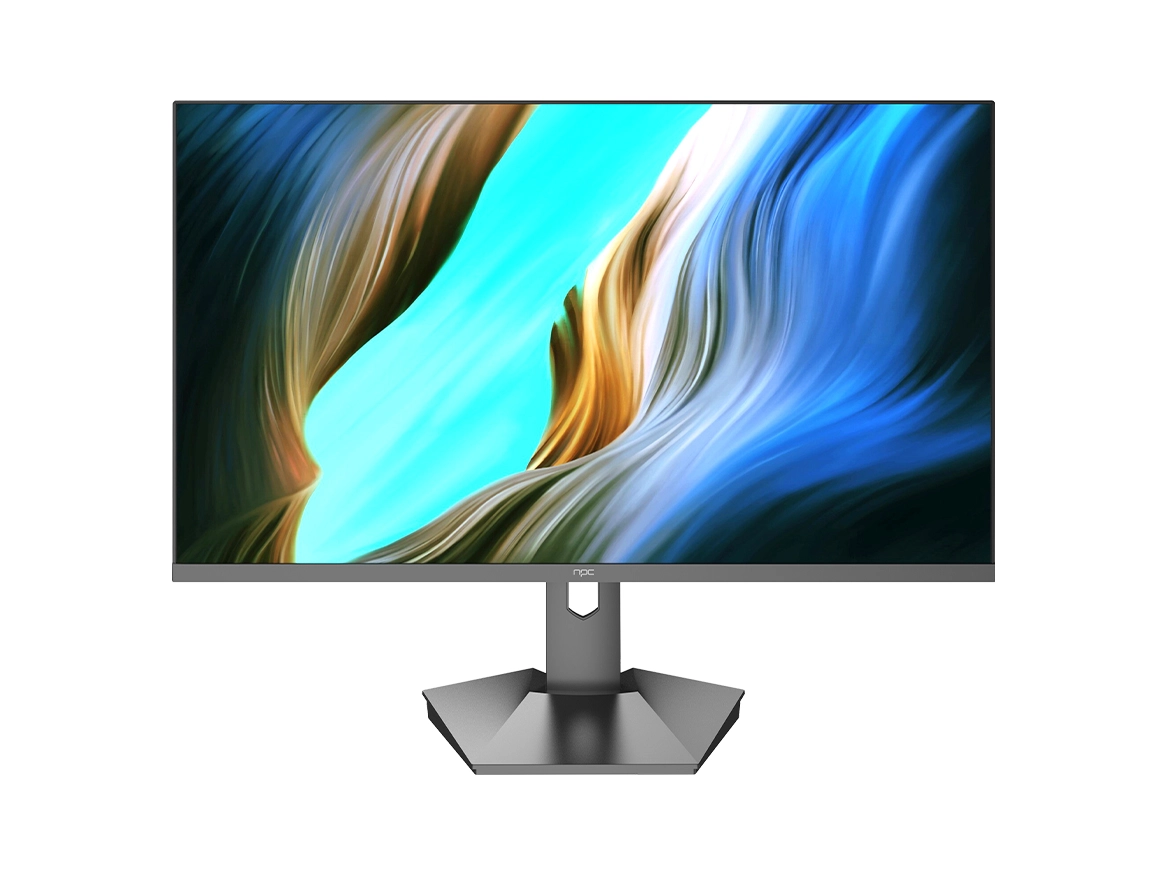


For professional photographers and color-critical creatives, the display monitor is the single most important piece of hardware in the entire digital workflow. It is the final arbitrator of color fidelity, contrast, and micro-detail, dictating how an image transitions from a conceptual vision to a viewable, printable reality. Coosing the right display is a financial and professional decision that directly impacts the quality of client deliverables and the integrity of a studio's output. While traditional In-Plane Switching (IPS) monitors have long been the gold standard for color accuracy, the emergence of Mini-LED backlighting has fundamentally shifted the goalposts, particularly in high-dynamic range (HDR) workflows. The critical question for the modern studio is this: does this advanced technology justify the higher price point for photography professionals who demand absolute precision?
The Mechanics: A Revolution in Light Control
Mini-LED technology represents a significant, generational leap from the standard LED backlight traditionally used in LCD monitors. Instead of relying on a few dozen large LED units, Mini-LED employs thousands of tiny LEDs—often smaller than 0.2mm—arranged in a dense array behind the liquid crystal panel.
The true power of this density is realized through the creation of numerous independent Local Dimming Zones (LDZ). Where a conventional monitor might have 8 to 16 dimming zones, a high-end Mini-LED monitor can boast anywhere from 500 to over 4,000 zones. This granular control allows the monitor’s light source to be precisely tailored to the image being displayed. In areas of the photograph that should be pure black (deep shadow details in a landscape, for instance), the corresponding LED zone can be completely turned off. Conversely, zones corresponding to bright highlights (such as sun reflections or specular highlights on a product) can be driven to extremely high brightness levels. This ability to deliver dazzling contrast is the technological cornerstone that makes Mini-LED a game-changer for digital imaging.
The Core Photographic Advantage: Contrast and HDR Performance
The principal benefit of Mini-LED backlighting is its dramatically improved ability to control light, directly addressing the primary weakness of all traditional IPS panels: the low contrast ratio. Standard IPS panels typically deliver a static contrast ratio around 1,000:1, which limits the depth of blacks and the overall dynamic range. Mini-LED technology shatters this barrier.
For professional monitors for photography, this breakthrough in contrast is highly significant. It allows for the accurate viewing and editing of true HDR content, where the subtle details in the darkest shadows and the structure within the brightest highlights can be seen and balanced simultaneously. This capability is vital for photographers shooting in uncompressed RAW formats, where the captured data often exceeds the standard dynamic range of an SDR monitor.
Feature | Mini-LED Backlighting | Traditional IPS/W-LED | Direct Impact on Photography |
Local Dimming | Hundreds/Thousands of independent Local Dimming Zones. | Fewer, larger zones, or none (edge-lit). | Allows for pinpoint control of light, matching the source image intensity. |
Black Levels | Near-OLED blacks (by completely turning off zones). | Often appear grey or "washed out" due to global illumination. | Critical for detail preservation in deep shadows and accurate tonal mapping. |
Peak Brightness | Extremely high (often 1000+ nits) sustained brightness. | Moderate (typically 300-400 nits). | Essential for viewing and editing HDR files and achieving visual "pop." |
Contrast Ratio | Exceptional (often 200,000:1 or more, dynamically). | Limited (typically 1,000:1 to 1,500:1). | Defines the visual "punch," depth, and realism of a rendered image. |
Ensuring Color Fidelity: Gamut Coverage and Calibration
Beyond contrast, Mini-LED monitors are almost universally paired with Quantum Dot (QD) technology. This combination uses the bright, pure blue light from the Mini-LEDs to excite QD materials, producing highly pure and saturated reds and greens. This process results in displays capable of covering 95% or more of the challenging DCI-P3 and AdobeRGB color spaces.
For commercial photographers, having a display that can accurately represent these wide gamuts is non-negotiable.
l AdobeRGB is the standard for high-quality printing, ensuring colors that look vibrant on screen are achievable and reproducible on paper.
l DCI-P3 is crucial for anyone working with video or images destined for modern devices (like high-end smartphones and cinema screens).
To be truly reliable, these professional monitors for photography require precise factory calibration. This process ensures that the monitor’s white point is accurate, the gamma curve is correct, and the color representation is certified to a low Delta E, meaning the difference between the intended color and the displayed color is virtually imperceptible to the human eye.
Workflow Impact: Where Mini-LED Excels
While any professional photographer can benefit from a high-quality display, Mini-LED technology offers disproportionate benefits to specific genres:
l Astrophotography and Night Photography: Mini-LED eliminates the "glow" or light bleed that plagues standard monitors when displaying dark skies. True black levels are essential for separating faint stars and nebulae from the deep background void.
l Commercial and Product Photography: The high peak brightness and contrast ensure that highly reflective product surfaces and specialized lighting effects (which often produce extreme highlights and shadows) are rendered accurately, minimizing guesswork during retouching.
l Landscape and Fine Art Photography: The unparalleled dynamic range helps photographers meticulously edit complex scenes involving bright skies and heavily shaded foregrounds, retaining detail in both areas simultaneously.
For these professionals, the ability to trust the on-screen image completely—especially in the shadows—reduces editing time and increases the confidence that the final print or digital file will match the edited vision.
The Investment: Addressing the Professional Premium
The complexity of placing thousands of LEDs and developing sophisticated dimming algorithms means Mini-LED carries a premium price. Additionally, the blooming effect mentioned earlier—the visible "halo" around bright objects on a black background—remains the primary technical limitation. However, in high-end displays, the number of dimming zones is maximized (often exceeding 1,000), and the algorithms are refined to minimize this artifact to a negligible level for most photographic work.
The decision to invest in Mini-LED must align with the photographer's core business. If a photographer's work commands high prices due to its technical excellence, or if the output is specifically targeting the modern HDR ecosystem, the Mini-LED advantage transforms from a luxury into a required competitive tool.
Final Verdict: Introducing NPC Professional Monitors
Mini-LED backlighting represents the cutting edge of LCD technology, offering photographers contrast and brightness levels that deliver an unprecedented level of visual fidelity. This technology empowers creatives to edit with confidence, knowing the display is revealing every nuance captured by their camera sensor.
For over a decade, NPC has been committed to providing cutting-edge display technology designed for visual professionals globally. Established in 2005, NPC focuses on delivering high-performance, quality-certified displays that bridge the gap between technical innovation and creative accessibility.
NPC’s line of professional monitors for photography integrates these advanced backlighting and panel technologies, ensuring the visual integrity demanded by the industry. The monitors are engineered to deliver the performance required for the most meticulous photo editing:
Feature | NPC Professional Monitor Specification (Targeted for Photographers) |
Panel Type | High-Quality IPS |
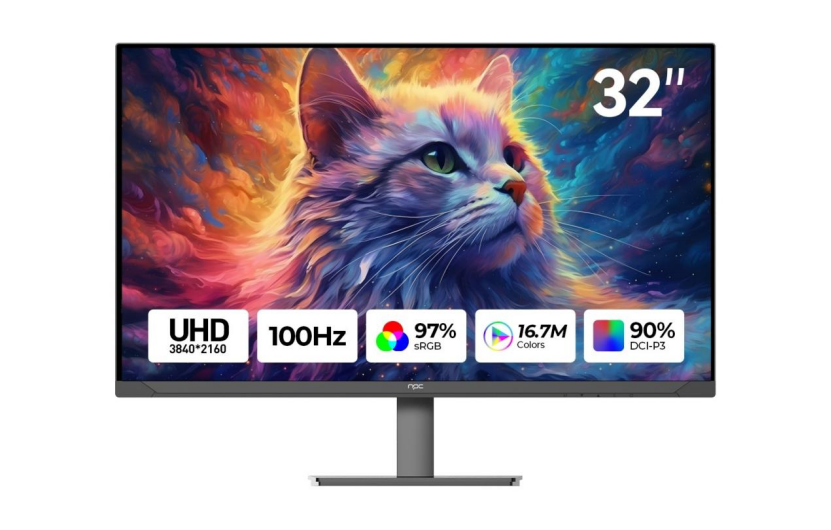
Resolution | Ultra HD 4K (3840x2160) |
Color Accuracy | Factory Calibrated |
Gamut Coverage | High Coverage of DCI-P3 and AdobeRGB color spaces |
Ergonomics | Full Adjustment Stands (Tilt, Swivel, Height) and Eye-Care Technology |
By rigorously calibrating these high-resolution displays and integrating superior contrast technology, NPC provides photographers and editors with the visual foundation needed to trust their work from capture to final output. Explore the NPC range of professional monitors for photography to find the display engineered for uncompromising visual fidelity.


