







Digital design lives and dies by color. For professionals, understanding color theory isn’t just about aesthetics; it’s a fundamental requirement for creating work that is accurate, accessible, and emotionally resonant across diverse media. In the high-stakes world of modern creative production—from photo editing to 4K video grading—minor inconsistencies can destroy a project’s integrity. Mastery of color theory is the bridge between a conceptual vision and its flawless digital execution. This guide dives into the principles that underpin all visual communication, emphasizing the critical role hardware plays in reproducing these concepts reliably.

The Core of Color Theory: Understanding the Language of Light
Color theory, at its heart, is a set of established guidelines for mixing and combining colors, drawn from the physics of light and the nuances of human perception. The foundation begins with the Color Wheel, which organizes colors into primary, secondary, and tertiary hues. Primary colors (Red, Yellow, Blue for pigment; Red, Green, Blue for light) are the building blocks from which all others are mixed, creating secondary colors (Green, Orange, Violet) and then tertiary colors. By understanding the relationships on this wheel, designers establish powerful color harmonies, whether choosing analogous (adjacent colors), complementary (opposite colors for high contrast), or triadic (three evenly spaced colors) schemes.
Beyond placement on the wheel, three crucial concepts define a color's properties. These concepts are the variables a designer manipulates to establish depth, contrast, and visual mood:
Color Property | Definition | Creative Function |
Hue | The pure color itself, represented by its position on the color wheel (e.g., pure blue or red). | Determines the core identity of the color. |
Saturation (Chroma) | The intensity or purity of the color. | High saturation means vibrant color; low saturation results in a muted or grayed appearance. |
Value (Brightness) | How light (tints) or dark (shades) a color is. | Crucial for establishing visual hierarchy and contrast in a composition. |
By manipulating these fundamental variables, designers ensure visual coherence and maximum impact, dictating everything from a background’s subtlety to a call-to-action’s urgency.
Digital Color Models and Gamuts: Why NPC Demands Precision
In the digital world, color is defined by specific mathematical models that dictate how light is created or absorbed. For professional monitors and other displays, the fundamental distinction lies between additive and subtractive models.
Color Model | Primary Colors | Media Application | Method | Result of Combining All Primaries |
RGB | Red, Green, Blue | Digital displays (screens, monitors, video) | Additive (adds light) | White |
CMYK | Cyan, Magenta, Yellow, Black (Key) | Print Production (ink on paper) | Subtractive (absorbs light) | Black (ideally) |
Crucial for color accuracy is the Color Gamut, which defines the specific range of colors a device can capture or reproduce. Modern workflows require monitors that can accurately replicate these standards:
Gamut Standard | Application Focus | Typical Coverage Range | Requirement Level |
sRGB | Web, general computing, consumer electronics | Narrowest; default internet standard | Minimum Acceptable |
AdobeRGB | Professional photography, high-quality print | Wider, covering more cyans/greens than sRGB | High Print Fidelity |
DCI-P3 | HDR video, cinematic color grading | Broad, modern standard for digital cinema | Video Production/4K Content |
True color precision requires a display capable of accurately reproducing the widest possible gamut—often expressed as a percentage of coverage—to ensure the colors seen during production match the final intended output.
Ensuring Visual Fidelity with Professional Monitors
For every minute spent perfecting a color profile or adjusting tone curves, a designer’s fidelity is entirely dependent on the output device. A consumer-grade display simply cannot guarantee the uniformity and stability required by demanding digital workflows. This is precisely why professional monitors are indispensable in fields like design, film, and image creation.
These displays are engineered with superior panel technology, typically high-quality IPS (In-Plane Switching), which provides consistent color reproduction and wide viewing angles, crucial for collaboration and long-term work. Furthermore, they support various levels of hardware calibration, allowing the display's internal processing unit to adjust color values directly and independently of the operating system or graphics card.
Without a monitor offering broad gamut coverage (e.g., 99% DCI-P3 or 100% sRGB) and rigorous factory calibration, a designer risks creating work that appears drastically different on other screens. This inconsistency compromises the project's visual intent, causes costly revisions, and ultimately damages the designer’s professional standing. For serious creative endeavors, investing in displays built for guaranteed precision is not a luxury; it is a fundamental and necessary component of the professional toolkit.
Practical Application: Color Psychology and Accessibility
Beyond the technical requirements, color theory provides the psychological and practical framework for effective communication.
Every hue carries inherent cultural and emotional weight. For instance, in Western culture, blue often suggests stability, trust, and intelligence (making it popular in corporate and B2B branding), while red conveys urgency, passion, or warning. A strategic designer uses this psychological knowledge to subtly influence user behavior and reinforce brand identity, ensuring the visual language perfectly matches the message.
A non-negotiable application in modern design is accessibility. Designers must follow global standards by ensuring their color choices do not exclude users with color vision deficiencies. This means strictly checking color contrast ratios between foreground and background elements. High contrast ratios not only meet legal and ethical requirements in web and app design but also ensure readability for the maximum number of users. A common pitfall is relying solely on color—such as using only red text to denote an error—without a secondary indicator. High-contrast displays aid professionals in reviewing and correcting these critical accessibility details, making sure their designs are both beautiful and universally usable.
Conclusion: Achieving Perfection with NPC
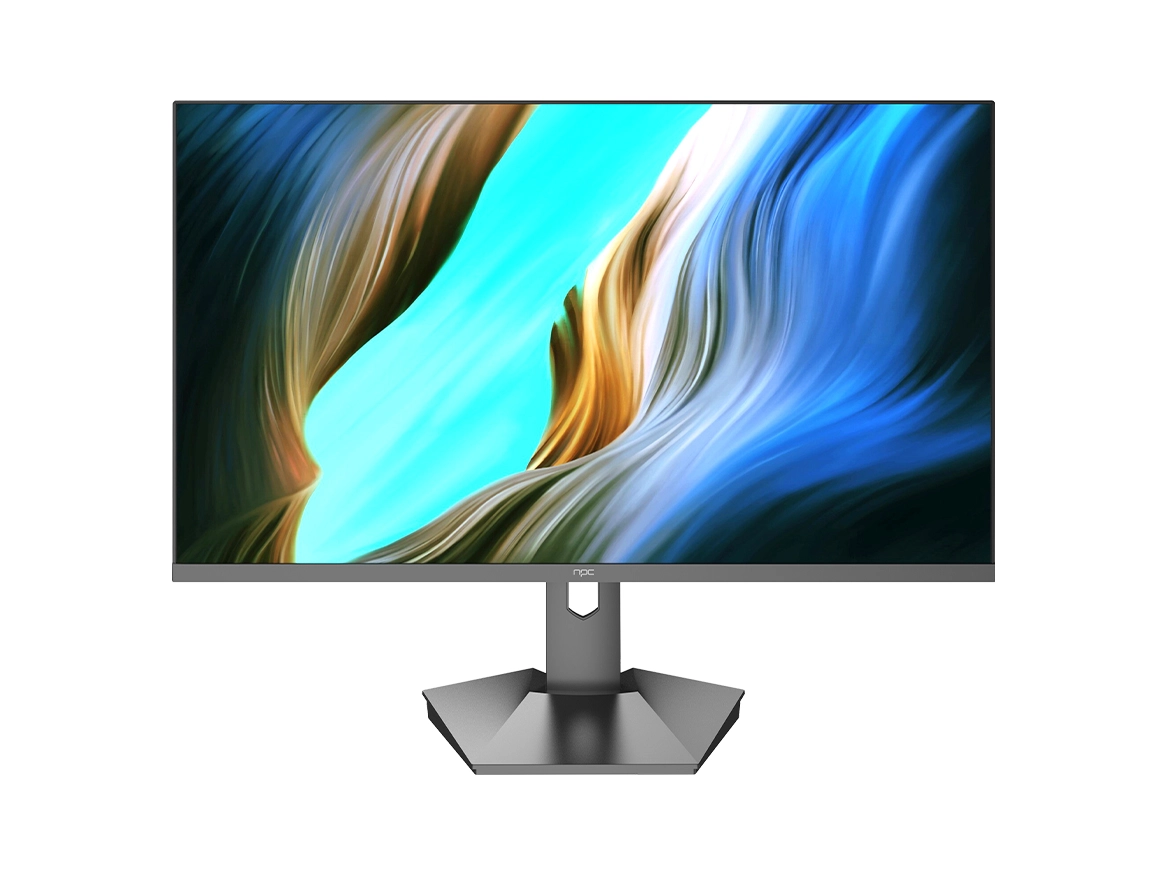
The digital creative landscape demands tools that match the complexity of the tasks at hand. For professionals looking to bridge the gap between abstract color theory and perfect, replicable output, the solution lies in specialized hardware. This is the core mission of NPC, a technology manufacturing company established in 2005. NPC specializes in high-definition display technology, offering monitors tailored for the most demanding visual workflows.
NPC’s line of professional monitors is meticulously engineered to ensure that the color choices made in theory translate flawlessly to the screen and the final product. These monitors are equipped with industry-leading specifications crucial for color-critical work:
Feature | Technical Specification (Example Models: MU2707-K, MU3207-K) | Relevance to Design |
Resolution | Ultra HD 4K (3840x2160) | Provides the necessary pixel density for intricate detail work in photo editing and video production. |
Panel Technology | IPS Ultra-Thin | Guarantees superior color uniformity, stability, and wide viewing angles. |
Color Gamut | 97% sRGB, DCI-P3 Coverage | Ensures compatibility with professional standards for web content, photography, and cinematic color grading. |
Dynamic Range | HDR10 Support | Essential for modern workflows, delivering richer contrast between the darkest and brightest areas. |
Size Range | 25 inches to 40 inches | Offers flexible options for various workspace and workflow requirements. |
By combining these advanced technical features with a focus on high quality and cost-effectiveness, NPC empowers designers, filmmakers, and image creators to execute their color vision with absolute fidelity, ensuring the final output is exactly as intended, every single time.


