




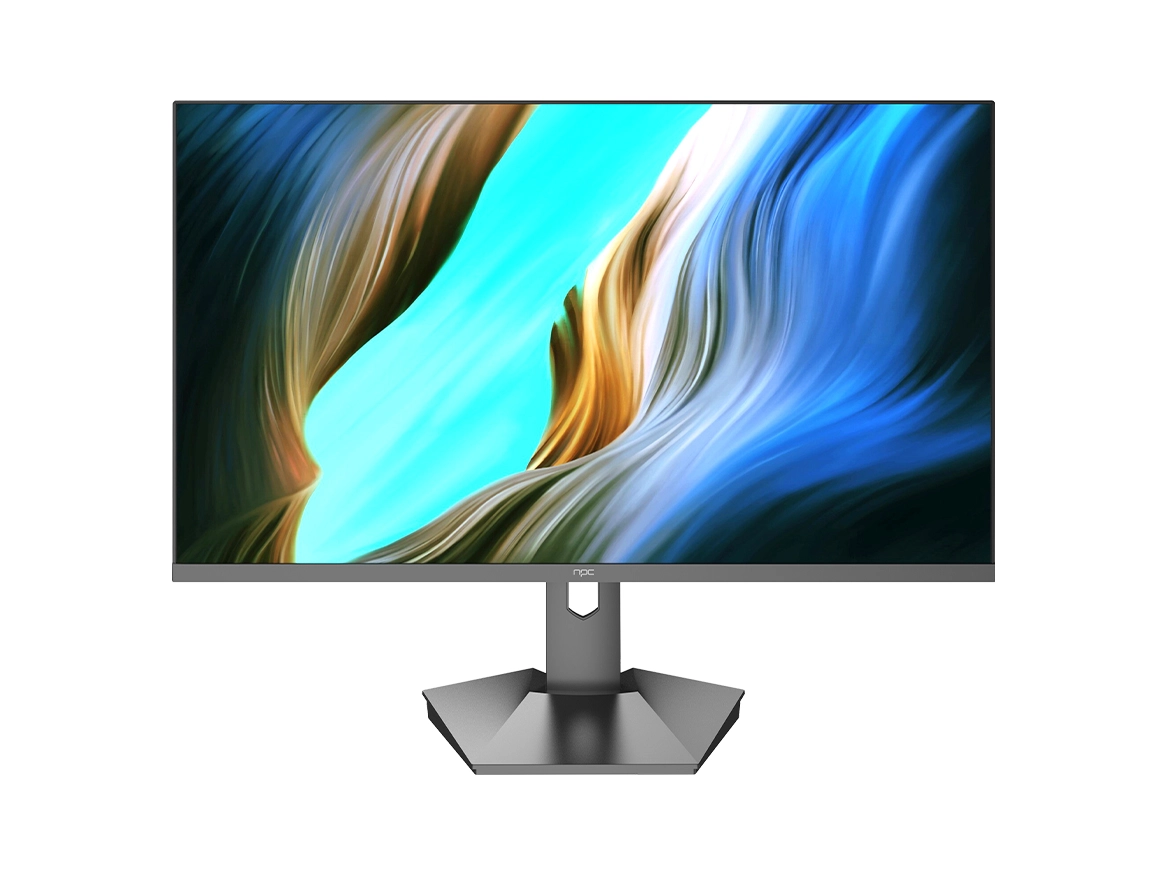


Picture your monitor as a digital painter's palette. The concept of color depth, measured in bits, defines how many unique shades of red, green, and blue that palette holds. An 8-bit panel can display 16.7 million colors, while a 10-bit panel can show over 1.07 billion. This difference seems vast on paper, but its practical impact is situational. For professionals working with a budget professional monitor, grasping where this distinction translates into a visible advantage is key to making a smart purchase. We will clarify the technical reality and pinpoint the specific workflows where a 10-bit signal provides a tangible benefit.

The Technical Breakdown: Gradients and Banding
The core advantage of higher color depth is the reduction of color banding. This visual artifact appears as distinct, visible lines in areas that should show a smooth gradient, like a sunset sky or a shaded shadow. An 8-bit display has fewer steps between colors, making these jumps more likely to be seen by the human eye, especially after extensive color grading or compression. A true 10-bit display uses its vastly expanded color palette to create transitions so smooth they appear perfectly continuous. When evaluating a budget professional monitor for detail-sensitive work, its ability to render clean gradients is a primary metric of performance.
Workflow Specifics: Who Needs the Extra Data?
The necessity for a 10-bit signal is not universal; it is dictated by your software and file types. For photographers and designers working in standard sRGB or Adobe RGB color spaces with 8-bit image files, an 8-bit monitor is often perfectly sufficient. The critical need emerges in video editing and high-end digital art. Modern video codecs frequently use 10-bit color for recording, and professional editing software like DaVinci Resolve requires a 10-bit display chain to properly visualize these files during color grading. Without it, you cannot accurately manipulate the full range of color and luminance captured by the camera.
System-Wide Considerations: Beyond the Panel
It is crucial to understand that a 10-bit capable monitor is only one part of a necessary chain. To see a true 10-bit image, your entire pipeline must support it. This requires a graphics card that can output a 10-bit signal, a compatible video interface like DisplayPort or HDMI, a driver configured for 10-bit color, and software that operates in a 10-bit mode. Many monitors use 8-bit+FRC (Frame Rate Control) technology to simulate 10-bit depth, which is a effective compromise for a budget professional monitor, though purists may note subtle differences under extreme scrutiny.
The value of 10-bit color depth is intrinsically linked to professional visual workflows, particularly in video post-production where it is a functional requirement, not just an enhancement. For tasks centered on static imagery in 8-bit formats, the investment may not yield a visible return. The goal is to align your hardware's capabilities with your specific creative demands. At NPC, we analyze these technical specifications in context. Our approach at NPC involves matching the nuanced needs of creative work with the realistic performance of hardware, ensuring professionals can allocate their resources wisely for a balanced and effective setup.


