






The modern display industry is in a perpetual state of innovation, constantly seeking to replicate the perfection of light and color found in the real world. At the pinnacle of this pursuit sits OLED (Organic Light-Emitting Diode) technology. While buzzwords like LED, QLED, and Mini-LED often compete for attention, OLED represents a fundamental change in how a television creates a picture, setting it apart from virtually every other consumer display on the market today.
For those in procurement, manufacturing, or distribution, understanding the core mechanism of OLED—and how it contrasts with the more ubiquitous LED-based technologies—is essential for accurately positioning products within the global market.

The Fundamental Difference: Emissive vs. Transmissive
To understand the unique qualities of OLED, one must first grasp the distinction between emissive and transmissive displays.
Most common TVs, including traditional LED, Mini-LED, and QLED models, are transmissive displays. This means they cannot produce light on their own. Instead, they operate as a sophisticated Liquid Crystal Display (LCD) panel layered over a dedicated LED backlight. The light must be transmitted through the liquid crystal layer, which twists and turns to block or allow light for each pixel. Even with advanced technology like Local Dimming (found in QLED/Mini-LED), the display still relies on a separate light source. As a result, when displaying pure black, the backlight is dimmed but often cannot be turned off entirely for a specific pixel, leading to minor light bleed or a grayish tint known as "blooming."
In stark contrast, OLED is a truly emissive technology. It replaces the entire LED backlight and liquid crystal layer with a film of organic compounds that literally emit their own light when an electric current is passed through them. The key breakthrough is that every single pixel in an OLED display—often more than 8 million in a 4K set—is an independent light source. This simple architectural change provides a host of performance benefits that immediately differentiate it from all transmissive competitors.
The OLED Advantage: Perfect Blacks, Contrast, and Speed
The self-lighting nature of the Organic Light-Emitting Diode gives it specific, defining advantages that shape its cinematic image quality.
This capability is most evident in its achievement of Perfect Black Levels and Infinite Contrast. When an OLED pixel is told to display black, it simply switches off. The result is a total absence of light. This allows the display to render true, perfect blacks that are indistinguishable from the bezel of the TV itself. Since contrast ratio is calculated by comparing the brightest white to the darkest black, a black level of absolute zero grants OLED displays an effectively infinite contrast ratio. This unrivaled contrast creates unparalleled depth, detail, and realism, particularly in dark or starry night scenes.
Beyond picture depth, the speed of light generation is critical. OLED pixels react almost instantaneously to changes in electrical current, giving the technology an industry-leading response time measured in microseconds. For gamers and sports enthusiasts, this lightning-fast response virtually eliminates motion blur and ghosting, resulting in ultra-smooth, clear, and sharp images during high-speed action.
Finally, the thin, direct nature of the display results in Wider Viewing Angles. Because light is emitted directly from each pixel, rather than being filtered through a thick layer of liquid crystal and polarizers, the picture quality does not degrade when viewed from the side. OLED maintains its color accuracy and contrast consistency at far wider viewing angles than standard LED-based televisions.
The Practical Reality: Where LED/LCD Still Excels
Despite OLED's dominance in contrast and response time, the practical application of LED-based technologies—including the affordable and reliable Direct-LED (DLED) TVs—still holds significant advantages in terms of brightness and cost-efficiency. This is why LED/LCD remains the market standard for many applications.
Traditional LED and QLED displays, which use inorganic compounds and dedicated backlights, can reach far higher peak brightness levels (measured in nits). This makes them superior for viewing in brightly lit rooms or environments with high ambient light, where an OLED screen might appear slightly dimmer or washed out. Furthermore, LED displays are not susceptible to permanent image retention, commonly known as "burn-in," and are typically much more cost-effective to manufacture, especially in smaller formats.
The Reliable Choice: NPC And The 32-Inch Flat Screen Smart TV
For the vast majority of consumer and commercial applications where value, reliability, and integrated smart functionality are paramount, LED technology offers the best balance of performance and price. This is especially true in compact models where the human eye gains minimal visual benefit from the extreme pixel density of an OLED panel.
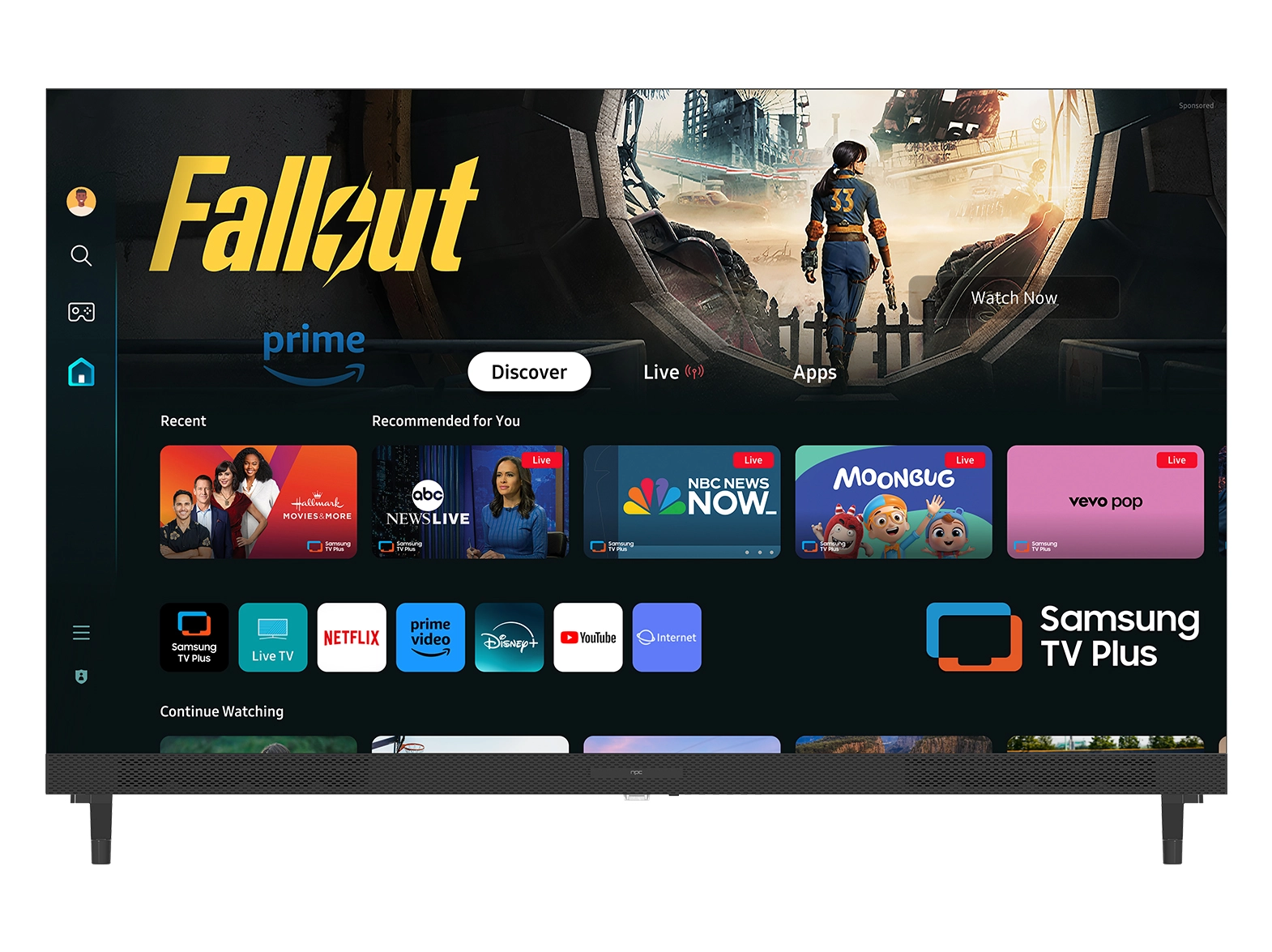
The NPC 32-inch WebOS Smart TV (Model: NPC-32N24) exemplifies this blend of practicality and modern features. As a high-quality 32-inch flat screen smart TV, it leverages an energy-efficient DLED panel with a Full HD 1920x1080 resolution, perfect for smaller rooms, apartments, or hospitality settings.
Feature | Detail (NPC-32N24) |
Display Resolution | Full HD 1920x1080 (DLED) |
OS Platform | LG webOS TV (2.0S) |
Smart Integration | Netflix, YouTube, Prime Video, Apple HomeKit, Matter IoT Ready, ThinQ AI |
Audio | 2x10W Speakers with Dolby Audio support |
Viewing Angle | 178°/178° |
This model demonstrates how advanced software and connectivity—like the integration of voice control (Google Assistant, Alexa) and certified streaming apps—provide a top-tier user experience, making it a compelling choice for businesses and consumers focused on smart functionality and value.
Partnering with NPC: Affordability and Innovation
For global partners seeking a comprehensive and cost-effective TV lineup, NPC (Guangzhou Xianyou Intelligent Technology Co., Ltd.) is a reliable technology manufacturing group established in 2005. Specializing in the research, production, and global sales of high-definition display and personal computer products, NPC's mission is to provide high-quality and affordable video display products for the global market. The company offers a wide portfolio of products, including QLED Smart TVs, Gaming Monitors, and Smart Monitors, powered by official authorized technology licenses from top operating system providers like LG (webOS Hub) and Samsung (Tizen OS). By choosing NPC, partners gain access to a manufacturer committed to technological innovation and delivering top-tier experiences—from the feature-rich 32-inch flat screen smart TV to large-format QLED solutions—all backed by global support and competitive pricing.


