






Selecting the right monitor panel type is only half the battle for a truly ergonomic and productive workspace. Once you have a high-quality display, its stand must allow you to properly adjust it to your unique body and task needs. The ability to move your screen using features like tilt, swivel, and pivot directly translates into reduced eye, neck, and back strain. For any professional or individual investing in a good office monitor setup, understanding these movements is as crucial as knowing the resolution.
Here is a detailed breakdown of the essential monitor adjustments and why they are necessary for an ideal ergonomic setup that supports comfort during long hours of work.

The Core Four: Essential Ergonomic Adjustments
A truly good office monitor stand—or an attached monitor arm—includes four fundamental axes of movement: Height, Tilt, Swivel, and Pivot. While Height is the foundational adjustment, Tilt, Swivel, and Pivot provide the necessary flexibility to adapt the display to the work environment and the specific task at hand.
Tilt: The Glare and Eye Strain Fighter
What it Does: Tilt allows you to rotate the monitor vertically, adjusting the screen's face angle up or down.
l Ergonomic Benefit: Tilt is primarily used to eliminate screen glare from overhead lights or windows, which is a major source of eye fatigue and headaches. It also ensures the screen is perpendicular to your natural line of sight. Experts recommend a slight upward tilt (around 10 to 20 degrees) to match the natural angle of your eyes as they look slightly downward, maintaining a relaxed neck posture. Achieving the correct tilt is mandatory for establishing the baseline ergonomic position and reducing glare over long work sessions.
Swivel: The Collaboration Enabler
What it Does: Swivel allows you to rotate the monitor horizontally, turning the screen left or right while the base of the stand remains fixed.
l Ergonomic Benefit: Swivel is the most important feature for collaboration and communication. If a colleague, client, or family member needs to review content on your screen, a simple swivel movement allows you to share the display quickly and comfortably, preventing others from awkwardly leaning or crowding your desk. In a permanent setup, swivel helps angle secondary screens toward your optimal viewing zone without having to physically move the entire unit. Swivel is crucial for multi-user workstations or shared office spaces.
Pivot: The Productivity Booster for Coders and Writers
What it Does: Pivot allows you to rotate the entire display 90 degrees, switching the screen orientation from standard landscape (horizontal) to portrait (vertical).
l Ergonomic Benefit: This is an indispensable feature for certain content-intensive professions as it dramatically reduces scrolling:
l Coders/Programmers: Viewing long lines of code in a vertical orientation makes the file much easier to read and debug.
l Writers/Editors: Reading and editing lengthy documents, legal files, or managing PDF pages is far more natural in portrait mode, mimicking a printed page.
l Data Analysts: Vertical orientation can be ideal for viewing lengthy spreadsheets or financial data feeds. Pivot is the adjustment that minimizes vertical scrolling, which is a significant factor in boosting efficiency for specific professional tasks.
Height Adjustment: The Posture Protector
While not one of the "T-S-P" movements, the monitor's Height adjustment is the foundation of all ergonomic setups.
l Ergonomic Benefit: Proper height alignment is essential for maintaining a neutral spine and preventing the head and neck from jutting forward (known as "tech neck"). The widely accepted rule is that the top edge of your screen must be at or just below your eye level when sitting up straight. This ensures the eye and neck muscles are relaxed and minimizes the chronic strain that leads to long-term pain. For users utilizing standing desks, a wide height adjustment range is absolutely essential for seamless transitions between seated and standing postures without compromising comfort.
Matching Adjustments to Your Work Style
The ideal good office monitor is one that adapts to the task and the user. Investing in full adjustability is a strategic choice, particularly for organizations looking to equip diverse workforces and reduce strain-related absences, and for individuals setting up a permanent, comfortable workspace.
Work Profile | Most Crucial Adjustment | Why It Matters |
General Multitasking & Data Entry | Height & Tilt | Mandatory for establishing the baseline ergonomic position, preventing neck strain over long days, and reducing glare. |
Collaborative Teams/Shared Spaces | Swivel | Allows for instant, easy screen sharing with colleagues sitting nearby without needing to shift the entire desk setup. |
Coding, Legal, or Document Review | Pivot | Essential for minimizing vertical scrolling, which dramatically boosts efficiency and readability for viewing source code or lengthy articles. |
Designers & Creative Professionals | Tilt | Ensures accurate color and detail representation across the entire screen, as viewing angles shift slightly with poor vertical positioning. |
When sourcing equipment for a team, prioritizing full adjustability reduces the risk of musculoskeletal discomfort, leading to a healthier and more focused workforce. For any individual user, these features transform an ordinary desk into a highly customizable, professional environment.
NPC: The Smart Choice for Good Office Monitor Ergonomics
When the goal is to enhance productivity and visual comfort, the focus must shift beyond resolution and refresh rate to features that support long-term use. NPC is a technology manufacturing company specializing in high-definition display products, committed to providing high-quality, cost-effective solutions for professionals and individuals globally.
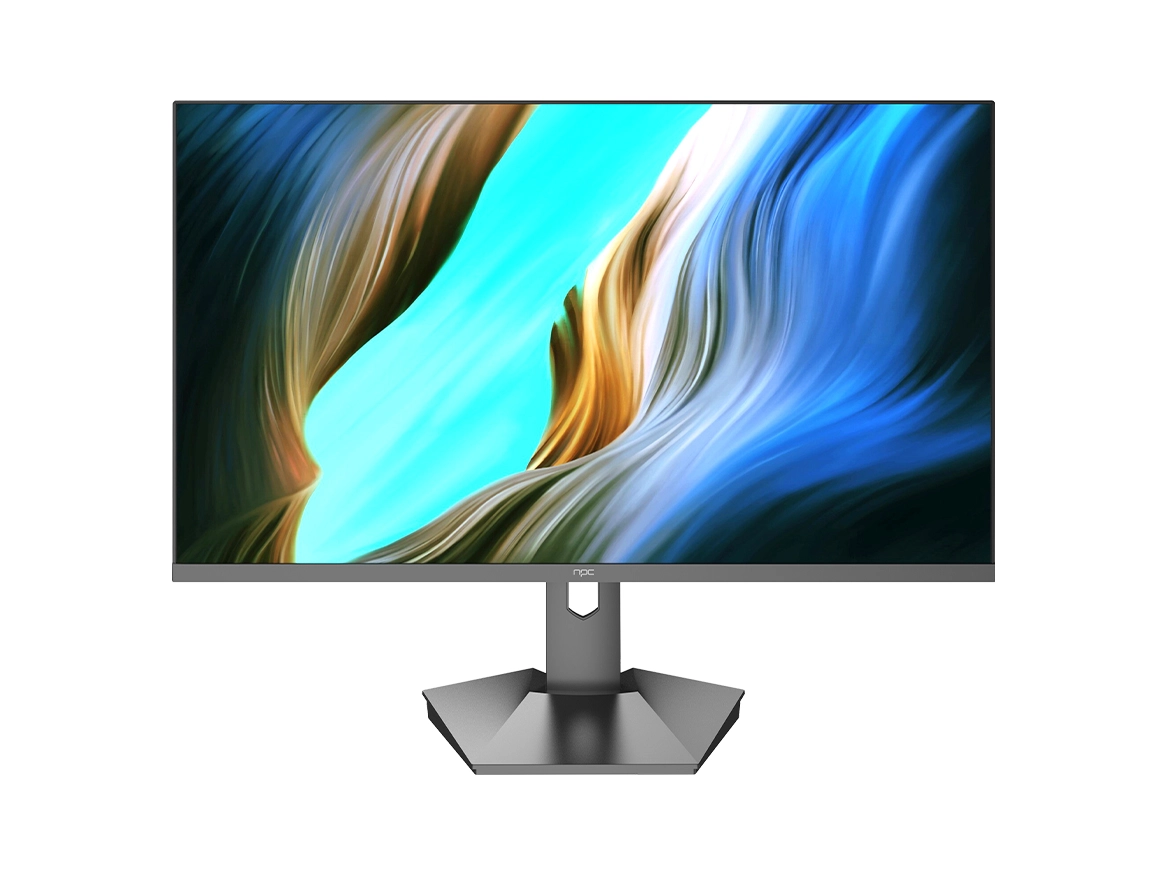
The NPC office monitor lineup is specifically designed with modern workplace demands in mind, offering screens from 20 inches to 32-inches with high-clarity IPS and VA panels. Crucially, the NPC brand highlights Ergonomic Design and Eye-Care Protection across its professional range. This dedication means that many NPC models come with highly adjustable stands to incorporate tilt, swivel, and height movements, or they feature VESA standard support for easy integration with third-party ergonomic arms that offer full adjustment flexibility, including pivot.
By choosing an NPC display, you’re not just acquiring a monitor; you’re investing in a reliable workstation component that offers the flexibility and visual comfort needed to sustain high productivity, day after day. Explore the NPC Office Monitors line to find a display that offers the resolution, color accuracy, and adjustment capabilities required to optimize your workspace.


